




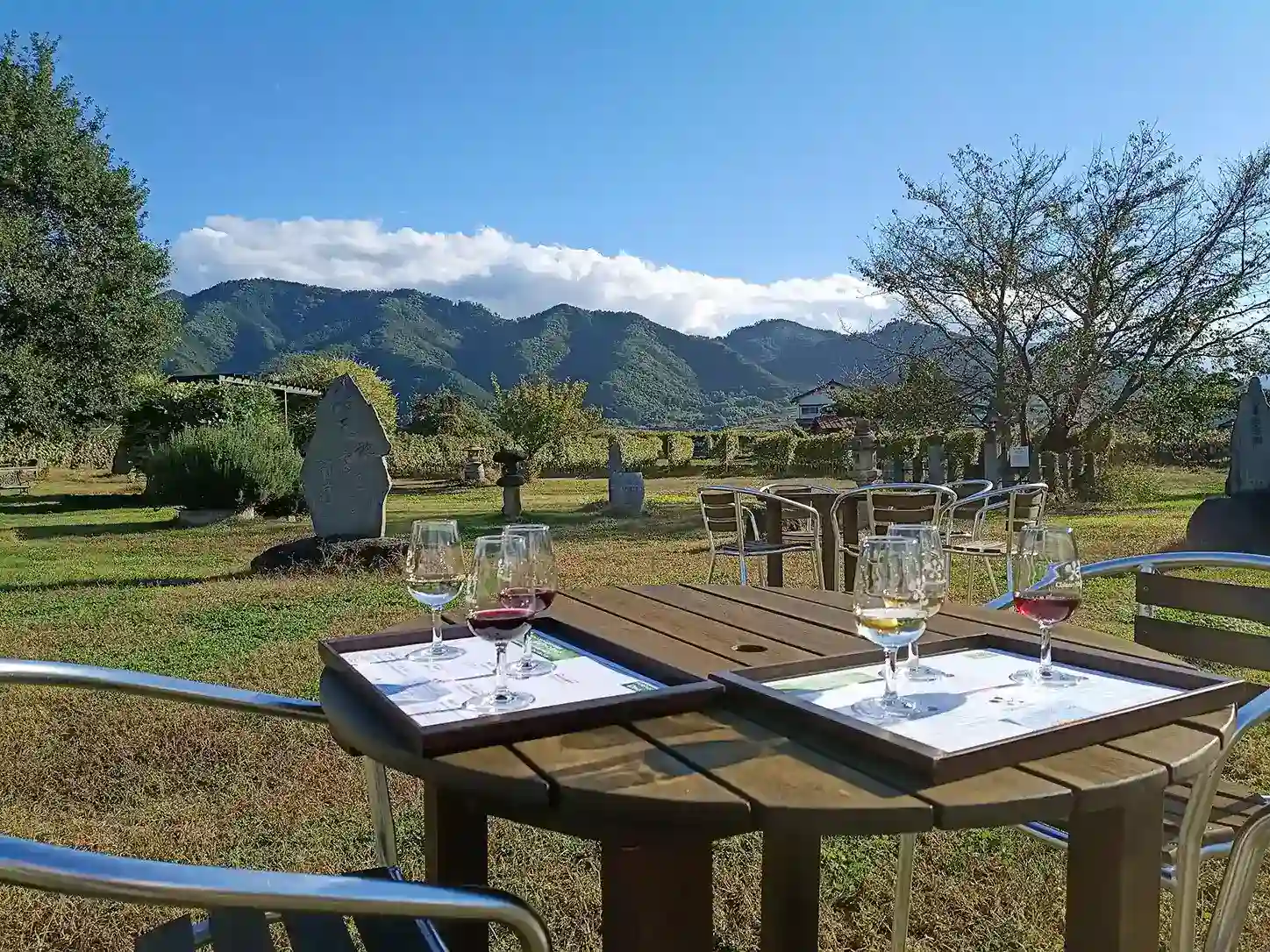
A winery tasting overlooking vineyards and mountains in Yamanashi, where Morey’s first-hand experience of Japanese wineries is deepest.
Choosing the best wineries in Japan is not as simple as reading a ranking, because Japan has far more producers and visitor formats than many first-time travelers expect. Some are historic estates with museums and organized tours. Some are small family producers with only a shop or tasting room. Others are working vineyards that receive visitors only by reservation, or not at all.
From my base in Yamanashi’s Koshu Valley, I have spent more than a decade visiting wineries, tasting with guests and seeing how different the public experience can be even between neighboring producers. My direct experience is deepest in Yamanashi, so I will say that clearly. For Nagano, Hokkaido, Yamagata and Osaka, this guide uses current official winery and regional information rather than pretending I know every cellar personally.
The wineries below are therefore a practical shortlist, not an absolute national ranking. They were selected because together they show the range of Japanese winery experiences: historical interpretation, serious seated tasting, vineyard scenery, large and small producers, regional grape varieties and visitor-friendly facilities. For a geography-first comparison, use the separate Japanese wine regions guide.
In This Guide
- How I define the “best” wineries in Japan
- Japanese wineries at a glance
- Ten Japanese wineries to know
- What visiting a Japanese winery is really like
- How I would plan a first winery trip in Japan
- What wines to look for
- Frequently asked questions
- Where to begin
How I Define the “Best” Wineries in Japan
The best Japanese winery for one traveler may be the wrong choice for another. Before I recommend a winery, I usually want to know what the person actually wants from the visit.
A history-focused visitor may prefer a producer with a museum, old cellar or clear connection to the development of Japanese wine. Someone mainly interested in wine quality may be happier with a quiet seated tasting, even when there is no cellar tour. A first-time visitor may value English interpretation and organized facilities, while an experienced wine traveler may be more interested in a smaller producer with limited releases.
I therefore judge winery visits through five practical questions:
- What can visitors actually do there: taste, shop, tour, see vineyards or enter production areas?
- Does the winery represent something distinctive about its region?
- Is the experience realistic without a car after tasting?
- Are reservations or language support required?
- Does the winery fit the traveler’s wine interests rather than simply having a famous name?
This matters because “winery visit” is not a standard product in Japan. Two wineries ten minutes apart can offer completely different experiences.
Japanese Wineries at a Glance
| Region | Best for | Representative wines | Typical visitor pattern |
|---|---|---|---|
| Yamanashi | A first winery trip from Tokyo, Japanese wine history and comparing several producers | Koshu, Muscat Bailey A, sparkling wine and international varieties | Relatively concentrated, but tasting and tour formats vary greatly |
| Nagano | Mountain scenery, vineyard-focused travel and European grape varieties | Merlot, Chardonnay, Sauvignon Blanc and Pinot Noir | Spread across several valleys; transport and reservations require more planning |
| Hokkaido | Cold-climate wine and northern vineyard landscapes | Pinot Noir, Chardonnay, Kerner, Zweigelt and other cool-climate varieties | Longer distances; usually best as part of a wider regional itinerary |
| Yamagata | Wine within a long-established fruit-growing culture | Delaware, Muscat Bailey A, Chardonnay and Cabernet Sauvignon | Visitor-friendly wineries exist, but producers are spread across the prefecture |
| Osaka | Adding winery history to an Osaka itinerary | Delaware, Koshu, Muscat Bailey A and international varieties | A small historic wine area beside a major urban region |
Ten Japanese Wineries to Know
This list is intentionally varied. It includes wineries that are useful to travelers for different reasons, not ten versions of the same tasting-room experience. Opening days, tours, tasting systems and reservation rules can change, so confirm the current arrangements before traveling.
1. Château Mercian Katsunuma Winery — Yamanashi
Château Mercian Katsunuma is one of the clearest starting points for a first visit to Japanese wine country. The property combines a wine museum, tasting counter, shop, nearby vineyards and an active winery, so it can provide historical context as well as wine tasting.
I find this type of structured stop useful at the beginning of a day. Guests who are new to Japanese wine can understand the broader story before moving on to smaller producers with fewer displays and less English information. Reserved experiences may include vineyard, production and cellar access, but the exact format should be confirmed in advance.
Choose it for: history, organized visitor facilities and a broad introduction rather than the atmosphere of a tiny family winery.
2. Grace Wine — Yamanashi
Grace Wine is a family producer closely associated with the modern quality development of Koshu. It is a strong choice for visitors who want to concentrate on the wines themselves, including Koshu, sparkling wine and premium red wines.
The important point is that the public experience is focused on tasting rather than a tour through the winery or vineyards. I have seen guests enjoy Grace most when they arrive expecting a serious, carefully paced tasting instead of a sightseeing stop.
Choose it for: wine quality, Koshu and a quieter tasting format. Seating, group size and current visitor policies should always be checked before arrival.
3. Katsunuma Jyozo and Aruga Branca — Yamanashi
Katsunuma Jyozo is particularly useful for understanding how one producer can build a distinct identity around Koshu. Its Aruga Branca range shows that Koshu is not limited to one light, simple style.
This is also one of the places where I have seen guests become genuinely surprised by Japanese wine. Depending on the visit and availability, the tasting may move from dry Koshu into more concentrated or sparkling expressions. The special Brilhante sparkling wine, when available, can be a memorable final taste.
Choose it for: a focused Koshu perspective, a strong sense of place and a more personal contrast with larger visitor facilities.
For a fuller local comparison, see the separate guide to seven Yamanashi wineries to visit.
4. Château Mercian Mariko Winery — Nagano
Mariko Winery in Ueda provides a different model from the compact winery areas of Katsunuma. The winery overlooks its vineyard, and the setting makes the relationship between grape growing and winemaking visible before the tasting begins.
Official English guided tours are available by advance reservation on selected operating days. The winery works with several international varieties, including Merlot, Chardonnay, Sauvignon Blanc, Syrah and others grown around the Mariko site.
Choose it for: vineyard scenery, an organized winery tour and a clear introduction to Nagano’s mountain-vineyard identity. It is not a casual extension of Tokyo sightseeing, so transport and timing should be planned as part of a Nagano trip.
5. Manns Wine Komoro Winery — Nagano
Manns Wine Komoro combines wine production with a large Japanese garden, old Chardonnay vines, an underground cellar and views connected with the Mount Asama and Chikuma River landscape.
This is a useful example of a winery where the grounds and visitor environment are part of the experience, not only the tasting counter. It can work well for mixed-interest groups because the visit includes scenery, garden space and winery history alongside the wines.
Choose it for: a broader visitor experience and for travelers already including Karuizawa, Komoro or eastern Nagano in their itinerary.
6. Hokkaido Wine and the Otaru Wine Gallery — Hokkaido
Hokkaido Wine is one of the more accessible places to begin exploring the prefecture’s wine. Its Otaru Wine Gallery provides a shop, tasting opportunities and scheduled experiences, while the wider range introduces grapes and styles from different parts of Hokkaido.
For a first-time visitor, a producer with established visitor facilities can be more practical than trying to arrange access to small vineyards that may not normally receive the public. It also provides a useful starting point before exploring Yoichi, Niki, Sorachi or other production areas.
Choose it for: accessibility, a broad introduction to Hokkaido wine and a visitor-friendly stop near Otaru.
7. Yoichi Winery — Hokkaido
Yoichi Winery is another visitor-oriented option in Hokkaido. The property includes a wine shop, gallery space and restaurant, allowing wine to be experienced alongside food and a relaxed regional stop.
This is not the same experience as a private appointment with a small grower-producer. Its value lies in ease of access and the ability to combine wine with a broader day in the Yoichi and Otaru area.
Choose it for: an approachable winery stop within a Hokkaido itinerary rather than an intensive technical visit.
8. Takahata Winery — Yamagata
Takahata Winery is one of Yamagata’s most visitor-friendly large producers. The site includes a winery shop, tasting area and views into parts of the production and cellar facilities.
Its range helps show why Yamagata should not be reduced to fruit wine. Chardonnay, Merlot, Cabernet Sauvignon, Muscat Bailey A and sparkling styles all contribute to the regional picture.
Choose it for: accessible facilities, a broad tasting range and an introduction to wine in southern Yamagata. It fits naturally into a wider Okitama-area trip rather than a simple Tokyo day excursion.
9. Takeda Winery — Yamagata
Takeda Winery is a historic estate in Kaminoyama with its own vineyard on a south-facing site. Official tourism information describes advance-reservation visits that can include the winery and vineyard.
This is a better fit for travelers interested in estate farming and the connection between vineyard practice and wine production. It also demonstrates the long continuity of grape growing and winemaking in Yamagata.
Choose it for: a more agricultural and estate-focused visit. Confirm the current shop and tour schedule because seasonal and weekly closures can affect access.
10. Katashimo Winery — Osaka
Katashimo Winery in Kashiwara offers one of the clearest ways to add winery history to an Osaka itinerary. Founded in 1914, it is described by Osaka’s official tourism organization as the oldest surviving winery in western Japan.
The surrounding Kawachi area has a long grape-growing history, and vineyards remain on slopes overlooking the Osaka urban area. Winery tours are held on selected dates and require reservations, while the direct-sales shop and vineyard paths provide other ways to experience the area.
Choose it for: history, an urban-edge vineyard landscape and a wine experience that can be combined with time in Osaka.
What Visiting a Japanese Winery Is Really Like
The biggest misconception I see is the assumption that every winery visit includes a winemaker, a vineyard walk, tanks, barrels and a long guided tasting. In reality, each producer decides what the public can access.
At one winery, the visit may be a self-service tasting machine and shop. At another, it may be a seated tasting with detailed explanations but no production access. A reserved tour may include vineyards and cellars, while a small family producer may limit visits during harvest because everyone is working.
English also varies. Some larger wineries publish English tour information or offer reserved English guidance. Others have little English on site. A local guide can interpret and explain the context, but that should not be confused with the winery itself operating an English-language tour.
Reservations matter more than many visitors expect. During harvest, special events, holidays or staffing shortages, a winery can change its normal visitor system. I never assume that last year’s arrangement is still operating in exactly the same way.
Transportation must be planned before the first tasting. Japan’s legal drinking age is 20, and driving after drinking is prohibited. That also means a bicycle should not be treated as a solution for moving between tastings.
For a closer look at tasting systems, reservations, fees and etiquette, see what to expect at a Japanese winery tasting.
Choosing the Right Winery Experience in Japan
The right winery experience depends less on collecting famous names and more on choosing a region and style that match the rest of the journey. Yamanashi is the clearest starting point for many visitors because it combines Japanese wine history, a high concentration of producers and several contrasting winery formats.
In my experience, the most rewarding day is not a race through the longest possible winery list. It is a balanced introduction: perhaps one producer with strong historical context, one tasting-focused winery and one smaller estate where the atmosphere is more personal. The contrast helps guests understand Japanese wine rather than simply recording where they stopped.
Nagano, Hokkaido, Yamagata and Osaka each make sense for different travelers. Nagano suits those interested in mountain vineyards and international varieties. Hokkaido offers cold-climate wine and a northern landscape. Yamagata connects wine with a long fruit-growing culture, while Osaka provides a historic winery experience close to a major city.
The important point is to choose the experience first: history, serious tasting, vineyard scenery, food, a small producer or an organized tour. Once that is clear, the most suitable region and winery become easier to identify.
For the difference between tasting in cities and visiting a producing region, read where to taste Japanese wine in Japan.
What Wines Should You Look For?
A winery visit is more useful when you arrive with a few reference points but remain open to what the producer does best.
- Koshu is the most recognizable Japanese white grape and is particularly important in Yamanashi. Styles range from light and delicate to barrel-aged, skin-contact and sparkling examples.
- Muscat Bailey A is an important Japanese red grape. It can produce aromatic, lighter-bodied reds, but producer choices and vineyard conditions create substantial variation.
- Nagano is especially useful for comparing Merlot, Chardonnay, Sauvignon Blanc and other international varieties grown in mountain valleys and higher-elevation sites.
- Hokkaido is closely associated with cold-climate freshness and grapes such as Pinot Noir, Chardonnay, Kerner and Zweigelt, among others.
- Yamagata combines long-established grapes such as Delaware and Muscat Bailey A with Chardonnay, Cabernet Sauvignon, Merlot and other international varieties.
The best approach is not to ask for one “famous Japanese wine” and stop there. Compare a Japanese grape with an international variety grown in Japan, then compare two producers from the same region.
Frequently Asked Questions
Are there wineries and vineyards in Japan?
Yes. Wineries and commercial vineyards operate from Hokkaido in the north to western and southern Japan. The main established regions include Yamanashi, Nagano, Hokkaido and Yamagata, while Osaka has an important historic wine culture beside a major urban area.
What is the most famous wine region in Japan?
Yamanashi is the clearest historical center of Japanese wine and the most practical first wine region for many visitors from Tokyo. Nagano, Hokkaido and Yamagata are also major regions with distinct climates, grapes and winery cultures.
Can tourists visit wineries in Japan?
Yes, but access varies. Some wineries welcome walk-in tastings, some require reservations, and others do not offer public tours. Always confirm whether the experience is a shop visit, tasting, guided tour, vineyard visit or production tour.
What wine is Japan best known for?
Koshu is Japan’s best-recognized white grape, while Muscat Bailey A is an important Japanese red variety. Japanese producers also make high-quality wines from Chardonnay, Merlot, Pinot Noir, Sauvignon Blanc and many other international grapes.
Which Japanese winery is best for a first visit?
There is no single answer. For many first-time visitors from Tokyo, a Yamanashi itinerary combining different winery types provides the best introduction. Travelers already visiting Nagano, Hokkaido, Yamagata or Osaka should choose a winery that fits that regional route rather than forcing a separate cross-country trip.
Where to Begin
The best Japanese winery trip is not the one with the longest list of famous names. It is the one that matches your route, wine interests and available time.
My direct experience is deepest in Yamanashi, where I guide private winery visits and see how much more guests understand when they compare different producers in one day. Travelers who want that local context can continue to the private one-day Yamanashi wine tour from Tokyo. The Koshu Valley day-trip guide explains the region and what makes a well-balanced visit, without turning this national article into a detailed self-planning itinerary.
For the wider national picture, continue with the Japanese wine regions guide and the individual Nagano, Hokkaido and Yamagata region guides.