


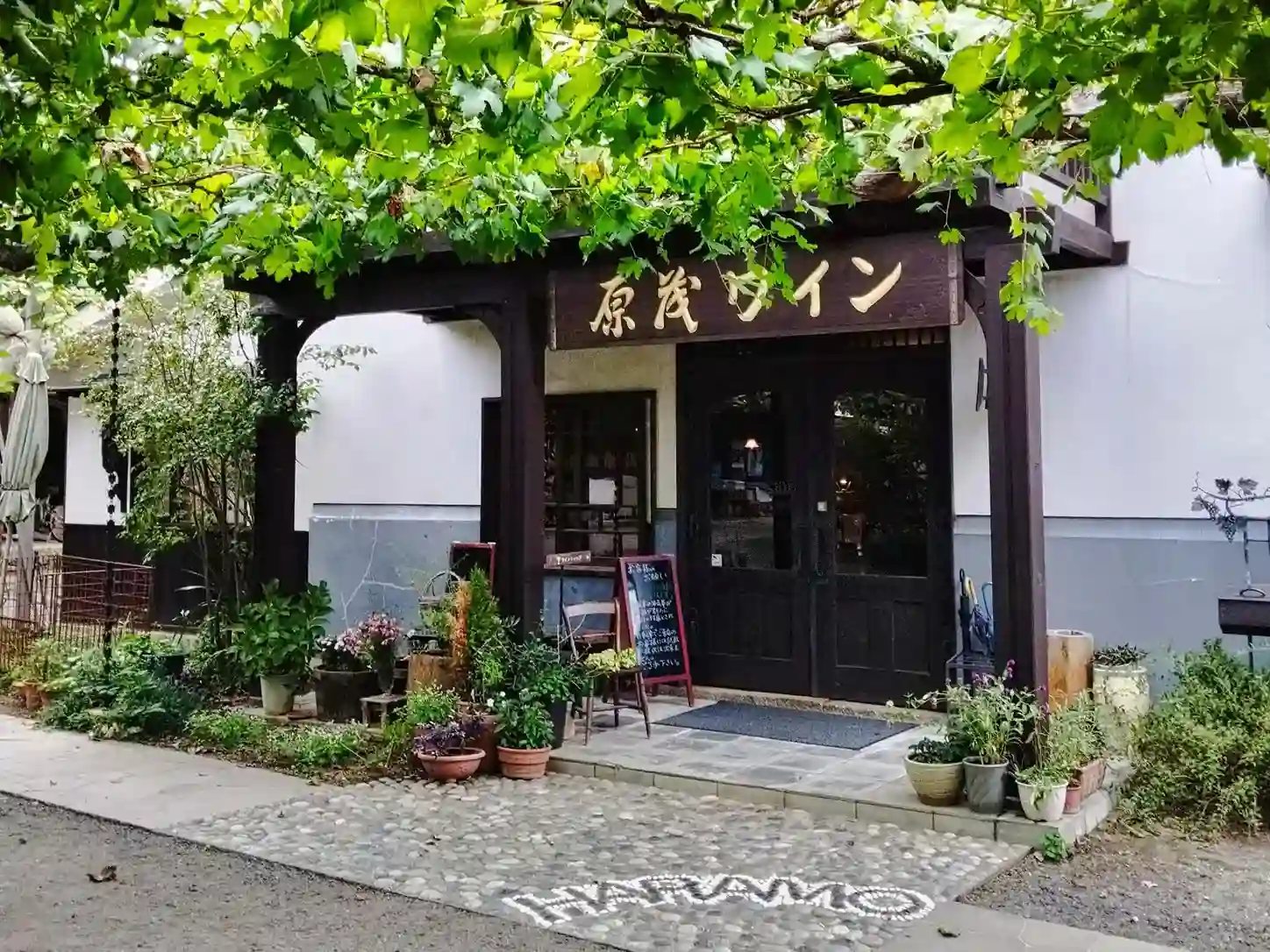
Haramo Wine beneath its grapevine canopy in Yamanashi’s Koshu Valley, photographed during a Winery Tours Japan visit.
Yamanashi has wineries with very different personalities, from historic producers that helped shape Japanese wine to small family wineries and newer projects taking Koshu and Muscat Bailey A in fresh directions. After many years guiding guests through the Koshu Valley, these are some of the wineries I particularly enjoy because each shows a different side of the region.
This is not a fixed itinerary or a list of places that everyone needs to visit. Winery schedules, tastings and access change throughout the year. I am highlighting these producers because of the wines, people, history, atmosphere and sense of place I have experienced personally.
For more background on the region, see the Yamanashi wine region guide. For producers beyond Yamanashi, see the best wineries in Japan guide.
Yamanashi Wineries I Particularly Enjoy
Château Mercian Katsunuma Winery
Location: Katsunuma, Koshu City
Highlights: Japanese wine history, Koshu, red wines, museum, historic cellar and vineyard setting
Château Mercian is one of the wineries I enjoy for both the wine and the history. It has an excellent selection of Koshu, and wines such as Tamamoro Koshu Kiiroka show the bright citrus side that the grape can achieve. I also like exploring Mercian’s reds. Its Mariko Vineyard Bijou Noir is one I have enjoyed, and Hokushin Pinot Noir Cuvée Akio from Nagano is another favorite reference point for me because it shows how different Japanese Pinot Noir can be from Yamanashi’s native red varieties.
The wine museum is a favorite with many of my guests. Walking through the historic buildings and cellar areas gives people a much clearer sense of how Japanese winemaking developed over time. It is one thing to talk about the history of Japanese wine; it is much more memorable to see the old equipment, buildings and cellar while tasting wines from the modern industry that grew from that history.
I also like the atmosphere outside. In good weather, the tables on the grassy lawn among the vineyards are a relaxing place to taste, with mountain views around the valley. That combination of wine, history and landscape makes Mercian memorable even for guests who arrive knowing very little about Japanese wine.
Grace Wine
Location: Katsunuma, Koshu City
Highlights: refined Koshu, vineyard expression, reds and sparkling wine
Grace is one of the wineries I particularly enjoy when I want to focus closely on the wine itself. Its Koshu wines can show a very precise, polished side of the grape, with enough variation between bottlings to make comparisons interesting even for experienced wine drinkers.
Gris de Koshu is one of my favorites. I like the way it shows character while remaining fresh and dry. Grace Koshu is another useful benchmark, while the single-vineyard Koshu from Toriibira and Hishiyama shows how much site can change the same grape. I also enjoy Grace’s reds and sparkling wines. Akeno is an interesting red reference, and Serena Extra Brut adds a dry sparkling expression to the range. Together they show that Grace is not only about one style of Koshu but about careful vineyard and winemaking choices across whites, reds and sparkling wine.
Grace is a good example of why Koshu should not be judged from a single bottle. For more on the grape itself, see the Koshu wine guide.
Katsunuma Jyozo — Aruga Branca
Location: Katsunuma, Koshu City
Highlights: Koshu specialization, Aruga Branca Issehara, Brilhante sparkling Koshu and distinctive reds
Katsunuma Jyozo is one of my favorite producers for seeing how much variation Koshu can show. The Aruga Branca wines are strongly identified with the grape, but they do not all taste alike. Vineyard source and winemaking choices give the range very different expressions while still keeping the character of Koshu at the center.
Aruga Branca Issehara is perhaps one of my top Koshu wines. What I particularly like is its recognizable Koshu character: green apple and citrus, with freshness and a clean finish. For me it is one of those wines that shows why Koshu can be subtle without being simple.
I also enjoy Aruga Branca Brilhante. I find this sparkling Koshu fruity but dry, with lively acidity, mineral character and citrus or grapefruit notes. Clareza and Pippa are useful contrasts with Issehara because they show different ways Katsunuma Jyozo can shape Koshu without losing the grape’s identity. It is this range of expressions that makes the producer especially interesting to me. The Koshu sparkling wine guide covers the sparkling style in more detail.
The reds are worth noticing as well. I enjoy several of them, and the Arugano range, including wines such as Fogo, gives the winery more breadth than someone expecting only Koshu might assume.
Marufuji Winery — Rubaiyat
Location: Katsunuma, Koshu City
Highlights: historic family-winery atmosphere, Koshu, Muscat Bailey A and a relaxed tasting setting
Marufuji is the winery and Rubaiyat is its wine brand. I like the winery for its relaxed atmosphere as much as for the wines. The historic building has a quiet, unhurried feeling that many guests respond to immediately, and it feels very different from a larger modern visitor facility.
I particularly enjoy the Koshu and Muscat Bailey A here. Rubaiyat Koshu Sur Lie gives a fresh, textured expression of Koshu, while Rubaiyat Koshu Barrel Aged shows how the grape changes with oak. On the red side, Rubaiyat Muscat Bailey A Barrel Aged is a good example of giving the variety more structure, and the winery also makes Merlot and other European-variety reds. For guests interested in Japanese red wine as well as Koshu, Marufuji can be an especially interesting producer to talk about.
It is one of those places where the building, wine and atmosphere all reinforce one another. The visit feels connected to the history of the area without becoming formal or museum-like.
Haramo Wine
Location: Katsunuma, Koshu City
Highlights: traditional building, Furuya-san’s hospitality, sur-lie and barrel-aged Koshu, Chardonnay and unusual red blends
Haramo has a very personal Katsunuma character. The tasting space is in a historic traditional building surrounded by grapevines, and the atmosphere is relaxed. Furuya-san has always been friendly in my experience, and when he is available his English makes conversations about the wines especially enjoyable for international guests.
Several Haramo whites have stood out to me. I particularly like Haramo Koshu Sur Lie for the extra texture from its time on the lees, and the estate-grown barrel-aged Koshu is another good example of how much oak can change the same grape. Haramo Blanc is the fresher everyday side of the range, while the estate Chardonnay can be excellent and considerably richer.
The reds are one reason Haramo is especially interesting to me. Haramo Black Queen has a deeper, more distinctive character than many visitors expect, and the Black Queen Sparkling Red is an unusual wine that I enjoy when it is available. I have also tasted small-production Haramo reds built around grapes such as Petit Verdot and Armonoir, as well as blends using Merlot and Yama Sauvignon. They show a side of Yamanashi red wine that is easy to miss if someone thinks the region is only about delicate Koshu and light Muscat Bailey A. The Japanese red wine guide explores those broader styles and varieties.
Manns Katsunuma Winery
Location: Katsunuma area, Koshu City
Highlights: larger-scale winemaking, Koshu and Muscat Bailey A, underground cellar, broad range and Solaris wines
Manns offers a different perspective from the small family wineries. The scale is larger, the range is broad, and the underground cellar gives the winery a strong sense of production history and technical winemaking.
I also enjoy the fact that Manns gives me tasting reference points beyond the usual Koshu discussion. Shinano Riesling is one wine I have liked for its restrained sweetness. Within the Yamanashi range, Yamanashi Koshu and Yamanashi Muscat Bailey A are useful clean reference points for the two main local grapes, while Koshu bamboo introduces a more classical oak-influenced style. Kobo no Awa Koshu Brut adds a crisp sparkling expression, so the range can move from straightforward local varieties to very different winemaking approaches.
The Solaris wines add another dimension at the premium end of the range. Bottlings such as Solaris Old Vintage Koshu and the premium Shinano Riesling wines show how far Manns is willing to take both aging and concentration. Taken together, the cellar, breadth of wines and long involvement with Japanese grape varieties make Manns an interesting contrast to the smaller producers around Katsunuma.
MGVs Winery
Location: Katsunuma, Koshu City
Highlights: Koshu and Muscat Bailey A, terroir comparisons, modern technical design and distinctive winemaking methods
MGVs feels completely different from the old family wineries in Katsunuma. The winery occupies a former semiconductor-processing facility, and that technical background gives the building and winemaking approach a very modern character. The focus on Koshu and Muscat Bailey A makes it especially interesting because so much variation is created from only two grapes.
One of my favorite Muscat Bailey A wines I have tasted at MGVs was B153 Katsunuma Hikimae 2018, an oak-aged Muscat Bailey A. I thought it was excellent. It had enough structure and oak character to show a more serious side of Muscat Bailey A than the light, fruity image people sometimes associate with the grape. The winery’s coding system is also useful once you understand it: wines such as B153 and B553 immediately point back to Muscat Bailey A, origin and winemaking method rather than relying on conventional brand names.
I have also enjoyed MGVs K537 POSH, a sparkling Koshu. K131 is another useful example of the winery’s more site-specific still Koshu, while B527 POSH takes Muscat Bailey A into sparkling rosé. Wines like these make MGVs interesting because the same two core grapes can appear in very different forms depending on vineyard source and winemaking method. It is a modern winery, but the discussion still comes back to Yamanashi’s local grapes and terroir.
98Wines
Location: Enzan, Koshu City
Highlights: hillside setting, Koshu and Muscat Bailey A, modern-rustic architecture and a clean, light-touch winemaking style
98Wines is one of the places I enjoy because the setting feels special before the wine is even poured. It sits high above the Koshu Valley, with broad views across the basin and, on clear days, sometimes toward Mount Fuji. The modern-rustic buildings are comfortable and relaxing, and the winery feels like part of a newer generation of Yamanashi wine.
Hirayama-san has always been friendly in my experience. His approach to Koshu and Muscat Bailey A is also one I appreciate. The wines I have tasted are clean, crisp and refreshing, and I like the way the winemaking allows the grapes and the character of the place to speak for themselves. The SOU series shows the approachable everyday side of 98Wines, while NOGI pushes the varieties in a more individual direction and KOKU gives the range a more mature, concentrated expression. Those differences make it easier to see the philosophy of the winery without needing a huge number of grape varieties.
98Wines shows that Yamanashi wine is still evolving. It has a different atmosphere and philosophy from the historic Katsunuma producers, but it remains closely connected to the local grapes and landscape.
Sadoya Winery
Location: Kofu City
Highlights: production areas, underground cellar, veranda setting and side-by-side Koshu and Muscat Bailey A comparisons
Sadoya combines wine history with a very enjoyable tasting setting. I like walking through the production area and underground cellar because it gives the wines more context, and the veranda overlooking the valley is a particularly pleasant place to taste.
One comparison I especially enjoy at Sadoya is tasting stainless-steel and oak-aged versions of Koshu, then doing the same with Muscat Bailey A. Keeping the grape the same while changing the winemaking makes the effect of stainless steel and oak immediately clear, even for guests who do not consider themselves wine experts. Sadoya’s broader range also includes wines such as its barrel-aged Muscat Bailey A and Château Brillant, giving a useful bridge from the native grapes into the winery’s longer history with more structured wines.
Sadoya has also surprised guests with something completely different. On some visits I have been able to taste a special 37-year-old umeshu produced by the winery. It is not something I assume will always be available, but when it is, many guests enjoy the contrast with the white and red wines.
Where to Taste Japanese Wine in Japan: Cities and Wine Country
You do not have to visit a winery to taste Japanese wine. Depending on where you are travelling and how much time you have, a Japanese-wine bar, restaurant, specialist retailer, producer tasting event or regional winery can each be a sensible choice. These options provide different experiences rather than a simple ranking of which is best.
Japanese Wine Bars, Restaurants and Retailers
- Japanese-wine bars: Useful for comparing wines from several producers or prefectures in one city stop. Available pours depend on the bar’s changing selection, and a wine list does not necessarily explain the vineyards where each wine was made.
- Restaurants: A practical way to try Japanese wine with a meal. Koshu, Muscat Bailey A, sparkling wines and internationally familiar grape varieties can all provide interesting pairings, but the experience is primarily dining, not winery education.
- Specialist wine shops and producer events: Useful for learning about labels and buying bottles; guided sampling and tasting events depend on the shop, location and date. Never assume that every retailer offers tasting.
- Urban wineries: May offer a look at winemaking in a city, but do not necessarily provide the surrounding vineyards or variety of producers found in a wine region.
For travelers with only an evening in Tokyo or another major city, these can be better choices than rushing into a day trip. Ask whether the venue actually offers wine by the glass or tastings, which Japanese producers are represented, and whether a reservation is needed.
Why Taste Japanese Wine in a Producing Region?
Visiting a wine region connects the bottle to the grapes, landscape and people behind it. A day in Yamanashi can contrast historical wineries, family producers and newer approaches to Koshu and Muscat Bailey A. That is different from choosing a few bottles in a city bar: you can observe how nearby wineries vary in setting, tasting format and winemaking priorities. The nine Yamanashi wineries described above are examples from my own experience, not a fixed route or a promise of admission.
Yamanashi is a practical first wine-country destination for many visitors travelling from Tokyo because several producers are concentrated in and around Katsunuma and Enzan. Other regions also have distinctive experiences: Nagano has widely separated mountain wine valleys; Hokkaido offers northern wine-growing areas; Yamagata has long-standing fruit-growing traditions; and Osaka has historic urban-edge wine production. For context rather than a promise of WTJ tours outside Yamanashi, see the Japanese wine regions guide.
Planning Independent Tastings in Yamanashi
Independent visits are possible, particularly when you select one or two wineries and confirm the arrangements in advance. Check opening days, whether tasting requires a reservation, whether a visit is limited to a shop or tasting room, and whether vineyards or cellars can actually be entered. Some small wineries do not normally offer public tours, and conditions can change during harvest or holidays. English information also varies; a winery should not be assumed to have English-speaking staff.
Transport matters just as much as winery selection. Many visitors can reach Yamanashi from Shinjuku by limited express train, but the wineries themselves are spread across the Koshu Valley and beyond. Do not assume they are all walkable from one station. In Japan, alcohol tastings are for guests aged 20 or older, and do not drive or cycle after drinking. Our Yamanashi winery tasting guide explains common tasting formats and practical visitor considerations.
Independent Visits or a Private Guided Wine Tour?
An independent visit suits someone content to explore a small number of wineries and organize local transport. A private guided experience suits visitors who want to compare several producers without managing each route and tasting themselves. Winery Tours Japan plans private days around the Koshu Valley (Katsunuma and Enzan area), provides local transport during the tour and English-Japanese interpretation, and arranges winery visits based on opening schedules and guest interests. Neither cellar access nor a meeting with a winemaker can be guaranteed. Guests travel to an agreed meeting location in Yamanashi; Tokyo pickup is not included.
Can I taste Japanese wine without leaving Tokyo? Yes. A specialist wine bar, restaurant, shop event or producer tasting can be a convenient option, subject to the venue’s actual offerings.
Can I visit Yamanashi wineries without a guide? Yes. Confirm opening times, tastings, reservation rules and transportation before you go. A guided tour is an alternative, not a requirement.
Is Yamanashi the only place to visit wineries in Japan? No. Wine is produced in other regions. Choose according to your route and interests; a Yamanashi day is one practical choice for visitors starting in Tokyo.
Experience Yamanashi Wine with a Local Guide
These wineries are highlights from my own experience, not a fixed route. Yamanashi has many good producers, and the most suitable wineries depend on the guests, the wines they are interested in and what each winery is able to offer on that particular date.
The value of visiting with a Bilingual English-Speaking Local Guide is having local context, communication with winery staff and someone who already knows the differences between the producers. That lets the day stay focused on the wine and the experience rather than on trying to work everything out independently.
Explore the private one-day Yamanashi wine tour for details about a guided winery experience with Winery Tours Japan.