


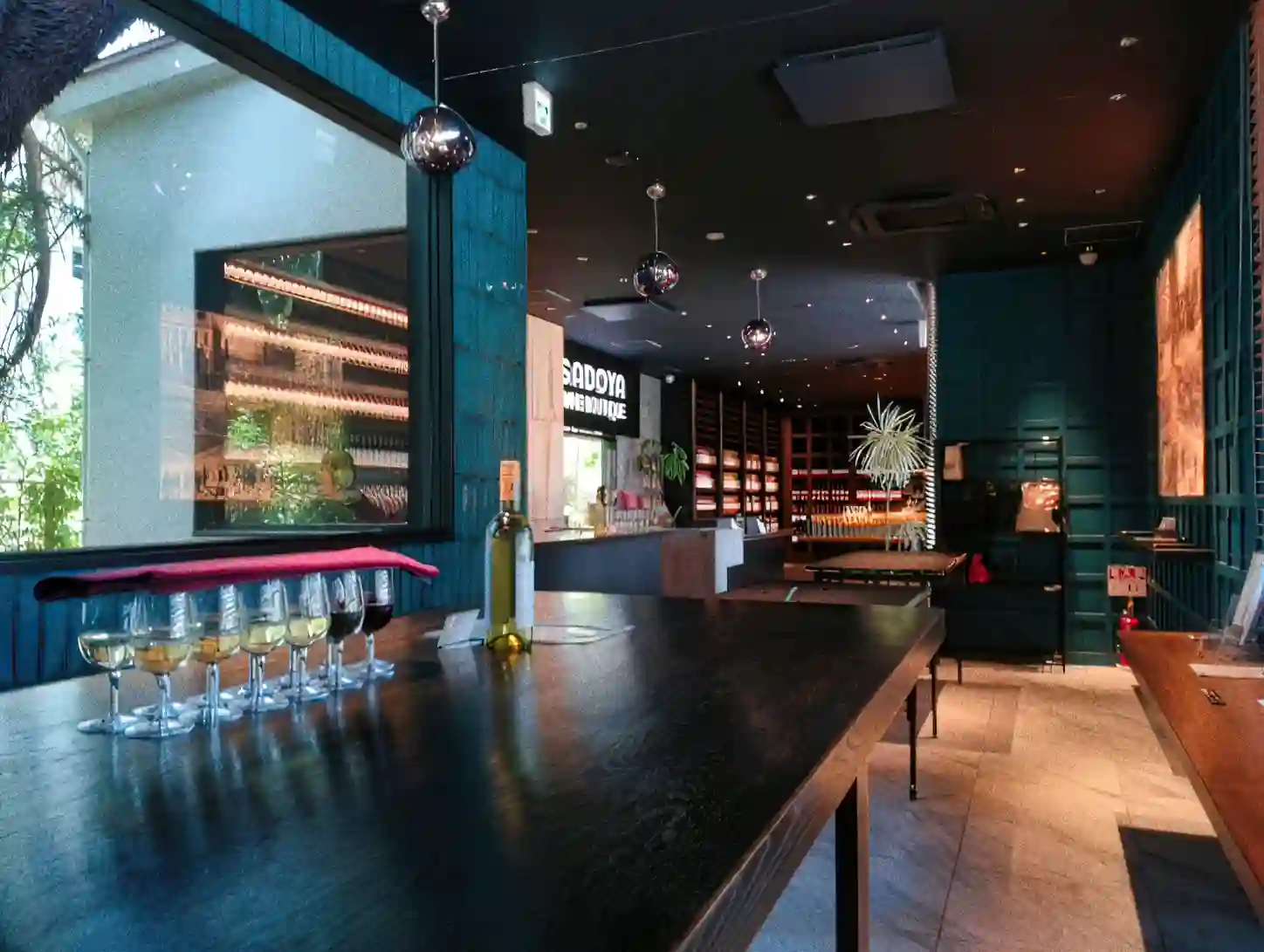
A wine tasting at Sadoya Winery in Yamanashi, with several wines ready to compare in the winery tasting room.
After years of guiding guests through Yamanashi’s wine country, one of the things I enjoy most is seeing how differently each winery presents its wines. Even neighboring producers can have very different ideas about what they want visitors to taste, how they explain their wines, and how much the winery itself becomes part of the experience.
That variety is one of the reasons I continue to find Yamanashi interesting. A tasting may be quiet and focused around a few carefully selected wines, more relaxed at a counter, or connected with a cellar, production area or historic building when access is available. What matters to me is not simply how many wines are poured, but whether the tasting helps guests understand the producer and the wine more clearly.
This is my first-hand view of Japanese wine tasting in Yamanashi: what I notice when tasting with guests, the wines I enjoy comparing, and why the setting and people behind a wine often matter as much as what is in the glass. For a producer-by-producer look at the region, see my Yamanashi wineries to visit guide.
What I Notice During Yamanashi Winery Tastings
Yamanashi has long-established producers, small family wineries, modern tasting rooms and larger wineries with museums, gardens or production facilities. Each creates a different kind of tasting experience.
At some wineries, the wine itself is almost the entire focus. At others, the building, cellar, vineyards or history add another layer. I have seen guests understand a wine differently once they know where the grapes were grown, why stainless steel or oak was used, or how the winery developed over several generations.
Tasting formats also vary. A self-service dispenser, a staff-poured tasting, a more focused comparison and a tasting connected with a cellar or production visit can all leave very different impressions.
For me, the most interesting part is the contrast. One producer may show a delicate, restrained side of Koshu, while another gives the same grape more texture or oak influence. A familiar international variety at one winery may then be followed by a Japanese grape that a guest has never tasted before. Those comparisons are usually more revealing than simply trying to taste as many wines as possible.
The Wines I Most Like to Compare With Guests
Koshu: Stainless Steel and Oak
Koshu is usually where I begin when I want someone to understand Yamanashi wine. I personally enjoy stainless-steel Koshu because it can show the grape very clearly. The wines can be light without being simple, with citrus, green apple, mineral notes, gentle bitterness and a clean finish.
Oak changes the picture. A barrel-aged Koshu can have more texture and weight, with spice or roundness that is not present in a stainless-steel version. Neither approach is automatically better. What interests me is tasting the difference and understanding what the producer was trying to achieve.
That comparison is also useful for guests who arrive thinking Koshu has one particular taste. After trying examples from different producers, they usually see that the grape can express itself in several ways.
My broader Koshu wine guide looks more closely at the grape itself and the styles produced in Yamanashi.
Muscat Bailey A: Fruit and Oak
Muscat Bailey A is another wine I enjoy comparing in different styles. A lighter example can show the naturally bright, aromatic fruit of the grape, while oak aging can add structure, spice and a different texture.
I have a soft spot for versions that still allow the fruit to come through clearly. At the same time, some of the more serious oak-aged examples show how far Muscat Bailey A can move beyond the simple, fruity image people sometimes have of it.
When guests taste different interpretations of Koshu and Muscat Bailey A during a day in Yamanashi, they begin to understand that the grape name is only the starting point. Producer style and winemaking decisions can change the experience considerably.
Sparkling Wines and Less Familiar Varieties
Yamanashi also produces sparkling Koshu, sparkling wines from other grapes, and a surprising number of less familiar Japanese varieties and blends. I enjoy introducing these when they appear naturally during a tasting because they show another side of the region.
Some sparkling Koshu wines I particularly enjoy have bright acidity, citrus and mineral character with a dry finish. They can provide an interesting contrast with still Koshu from the same region.
Japanese-bred reds such as Black Queen, Kai Noir and Yama Sauvignon can be equally interesting. These are often the wines that make experienced wine drinkers stop and ask questions because they do not fit neatly into the varieties they already know from Europe, Australia or the United States.
For a broader look at the grapes and wine styles produced here, see Wines of Yamanashi.
The Winery Itself Changes the Tasting
Wine does not exist separately from the place where it is made, and some Yamanashi wineries make that especially clear.
At Château Mercian Katsunuma, I enjoy the historical side of the property as much as the tasting itself. The museum and older buildings help guests understand how long winemaking has been developing in this part of Japan. Tasting near the vineyards with the mountains in the distance creates a very different impression from sitting in a modern indoor tasting room.
Haramo Wine has another kind of character. Its historic building and grapevine-covered setting immediately give the winery a sense of place. Furuya-san has always been friendly when circumstances allow us to meet, and those human connections can make a winery visit much more memorable than simply reading technical information about a bottle.
Sadoya offers a different experience again. Its cellar and production areas can provide useful context before tasting the wines. I especially enjoy comparisons that help guests notice how stainless steel and oak can affect Koshu or Muscat Bailey A.
These differences are why I prefer to think about the individual character of a winery rather than judge tasting experiences by the size of the facility or the number of wines available.
What Is Included on Winery Tours Japan Tours
Tasting arrangements differ from winery to winery, and the wines being poured can change with vintages, stock and the season. Small-production wines sometimes sell out, and wineries regularly change their available selections.
On Winery Tours Japan private tours, all standard scheduled winery tastings are included in the tour price. Guests do not need to calculate standard tasting charges as we move through the day.
I prefer it that way because the focus can stay on the wine and the experience. When a particular comparison helps someone understand a producer or grape more clearly, the conversation can remain about the differences between the wines rather than the cost of another standard tasting.
I also avoid promising a fixed list of bottles. Real winery visits change from day to day, and discovering what a producer is currently pouring is part of the experience.
Explaining the Wine Across Languages
English support varies considerably between Yamanashi wineries. Some producers have English tasting notes or staff members who are comfortable communicating in English, while others operate mainly in Japanese.
That does not make those wineries less interesting. In many cases, some of the most useful information comes from a short Japanese explanation about the wine, the vineyard or a decision made during production.
As a Bilingual English-Speaking Local Guide, I interpret when needed, but I also try to give guests enough background for the wine to make sense in context. I may explain why two Koshu wines taste different, introduce an unfamiliar Japanese grape, or explain why a particular producer is significant in the development of Yamanashi wine.
I do not promise meetings with winery owners or winemakers because wineries are working businesses and their schedules change. When those conversations happen naturally, however, they can become some of the most memorable parts of a winery visit.
Why I Prefer Comparison Over Counting Samples
I have never thought that a good winery day should be judged by the largest possible number of samples. After a point, more wine does not necessarily mean more understanding.
What I find more useful is comparison: two Koshu wines made differently, two Muscat Bailey A wines with different approaches, or a familiar international grape beside a Japanese variety. Guests tend to remember those contrasts because they give each wine a clearer context.
The same principle applies to the wineries themselves. A day becomes more interesting when the producers differ in style, scale, history or atmosphere. Rather than turning the experience into a race through a checklist, I prefer to give guests enough time to notice those differences.
On a private tour I can also take the group’s interests and wine preferences into account while working with the wineries that are realistically available. The private one-day Yamanashi wine tour includes scheduled winery tastings, local transportation during the tour, a seasonal local lunch and guiding by Morey, a Bilingual English-Speaking Local Guide.
Why Yamanashi Keeps Tasting Interesting
What keeps Yamanashi interesting for me after years of tasting here is that the region never feels finished. Producers continue to experiment, vineyards change, vintages behave differently, and younger wineries now sit alongside companies with long histories.
Koshu may be the grape that brings many people to Yamanashi, but a good tasting day often leaves them thinking about much more than Koshu alone. It might be a Muscat Bailey A they did not expect to enjoy, an unfamiliar Japanese red, a sparkling wine, an old cellar, a mountain view or a conversation at a winery that stays with them.
That is the part of Japanese winery tasting I value most: not collecting samples, but leaving with a clearer sense of the people, grapes and places behind Yamanashi wine.