


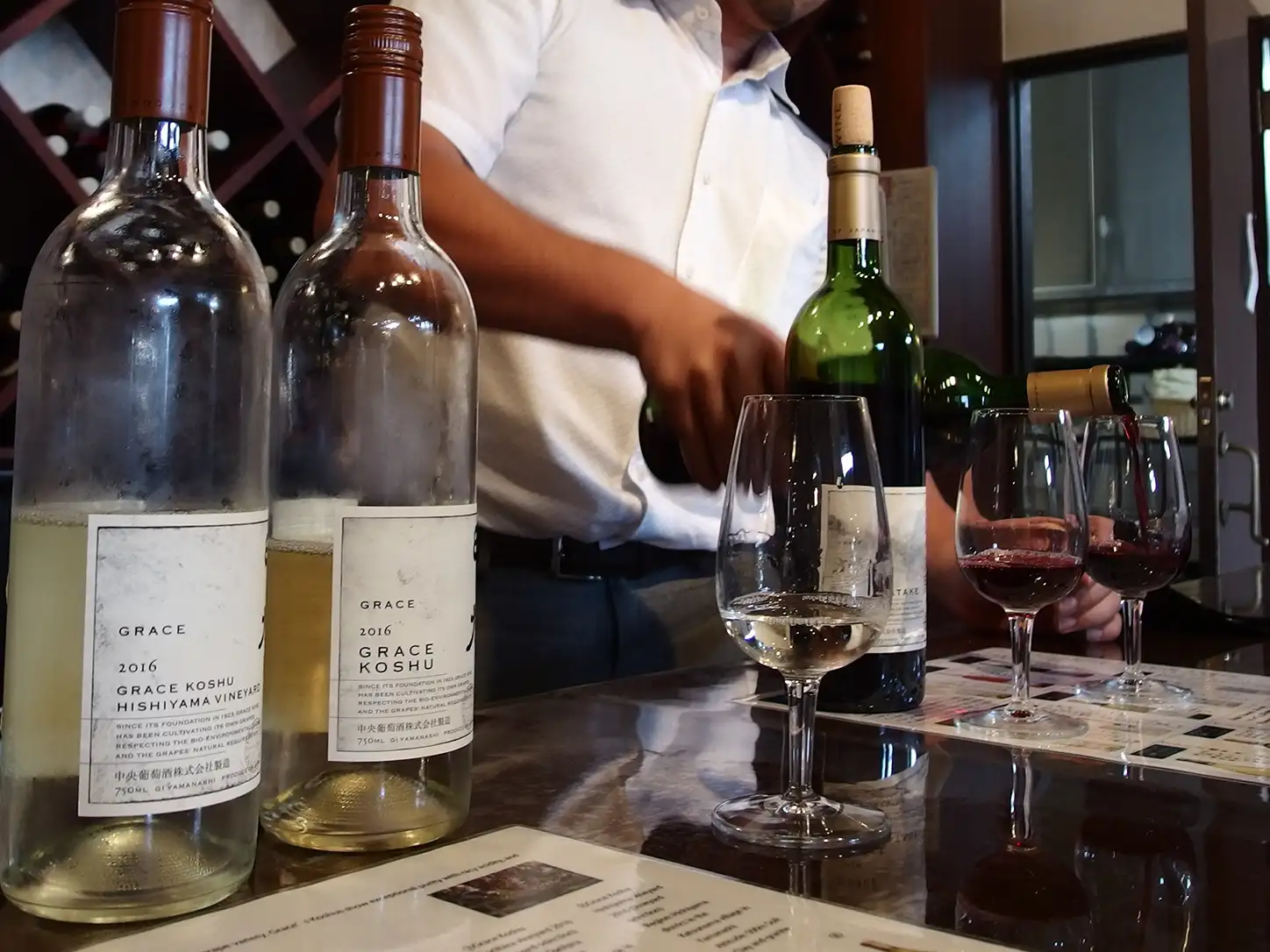
A winery tasting in Yamanashi, where thoughtful planning, local knowledge and a relaxed pace shape the experience.
This Japanese wine travel guide explains what guests can expect when they book a private winery experience with Winery Tours Japan. It covers the easy train journey from Tokyo, the structure of the day, how I select wineries, what happens when plans change, and the practical help I can provide when guests purchase wine.
Quick answer: travel from Shinjuku to Yamanashi by limited-express train in approximately 90 minutes. The journey is easy, comfortable, scenic and fast. I meet guests at Kofu Station and manage the winery day from there, including the route, appointments, timing, interpretation and lunch.
I have lived in the Koshu Valley for more than a decade and have built long-standing relationships with winery owners, winemakers and local residents. Those relationships, together with the interests of each group and the realities of the day, allow me to create an experience that feels personal rather than fixed.
The Easy 90-Minute Train Journey from Tokyo
The train is the recommended way to reach Yamanashi from Tokyo. Limited-express services from Shinjuku make the journey in approximately 90 minutes, and the ride is comfortable, scenic and fast. It is a relaxed beginning to the day and brings guests directly to the region where the tour takes place.
Before the tour, I provide clear train information and the appropriate arrival time. The usual meeting point is Kofu Station at around 10:30 a.m. When circumstances change, I may also help guests adjust their return tickets so the journey back to Tokyo remains straightforward.
Once we meet in Yamanashi, I take care of the winery route, appointments and timing. Guests do not need to arrange the order of the day or work out how the wineries fit together. The train-first approach also means that everyone who is of legal drinking age can participate in the tastings.
For a broader introduction to the region before your visit, read the Yamanashi wine-region guide.
What I Arrange Before the Tour Begins
Each itinerary begins with a consultation. I ask about the group, wine experience, preferred styles and the kind of day guests would enjoy. Some people are already serious wine drinkers, while others are discovering Japanese wine for the first time. Both are welcome.
Winery selection can be shaped around an interest in Koshu, Japanese white wine, red wine, sparkling wine, small family producers, winery history or a balanced introduction to several styles. On one tour, a couple told me they were especially interested in white wine, so I built the day around that preference while still including selected reds for comparison. I also helped them with their train information, adjusted their return tickets and chose a local restaurant that suited the day.
Celebrations and special occasions can also influence the plan. A travel advisor once asked me to create a surprise honeymoon day in the Koshu Valley. I combined wine tasting with walking, local exploration and lunch so the experience felt like a complete day in Yamanashi rather than a sequence of tasting counters.
Special or private tasting sessions may sometimes be possible at select wineries after consultation, but they depend on the producer and current availability. I never promise access that has not been confirmed.
What a Private Winery Day Usually Includes
A typical Winery Tours Japan experience lasts about six hours, usually from 10:30 a.m. until approximately 4:00 or 4:30 p.m. Most days include five wineries and more than twenty wines, with two winery visits in the morning, lunch at around 12:30 and three winery visits during the afternoon.
All standard winery tastings are included in the tour price. The experience is private and designed for small groups, normally two to five guests. Solo guests and larger private groups may sometimes be possible after consultation.
Lunch is part of the experience, not a hurried break between wineries. Depending on the route and current opening arrangements, it may be Japanese fusion, a rustic local set meal or Japanese-French cuisine. I select places that fit the timing and character of the winery day, including restaurants I know personally.
See the complete private Yamanashi winery-tour experience for the current tour format and booking details.
Solo Travelers Are Welcome
Solo winery days may be possible after consultation. A private experience can be a comfortable and enjoyable way for one person to discover Yamanashi without being placed into a larger group or having to manage the winery day alone.
For women traveling alone, the format can feel especially reassuring. I provide clear train guidance before arrival, meet the guest at Kofu Station and remain the same local guide throughout the winery visits, lunch and return to the station. The pace can be adjusted around the guest’s interests, and there is always someone present to explain what is happening and help when plans change.
A solo day is still social and engaging. Conversations during tastings, meetings with winery staff when available, lunch and local interpretation create a shared experience rather than a day spent moving quietly from place to place.
How I Adapt the Day When Plans Change
A private tour has a clear structure, but it should not feel rigid. Trains can be delayed, weather can change, lunch may take longer than expected and guests may want more time at a particular winery. I can speed up or slow down the day, change the sequence of visits and make sensible adjustments without losing the character of the experience.
One guest lost much of the morning after serious train confusion. Instead of abandoning the day, I rebuilt the schedule around the time that remained. She still visited three tasting rooms, a temple and Senga Falls, and was able to enjoy a view of Mount Fuji. The day was shorter than originally planned, but it still reflected what she had hoped to experience in Yamanashi.
On another occasion, a couple booked two full winery days. Cloud and light rain hid Mount Fuji, but the weather did not define the experience. Over the two days we visited ten wineries, met several people connected with the wineries, enjoyed memorable lunches and adjusted the pace as needed. By the end, the guests had purchased enough wine that I helped them find extra suitcases.
These examples are not fixed promises of particular stops. They show how local knowledge and flexibility can protect the quality of the day when the original plan needs to change.
More examples of how I work with guests appear on the Winery Tours Japan reviews page.
What to Expect Inside Japanese Wineries
Japanese wineries do not all offer the same kind of visit. One producer may have a formal seated tasting, while another may use a relaxed tasting counter. A visit may include a cellar, production area, vineyard, museum or historical display, while another winery may concentrate almost entirely on the wines.
At smaller wineries, the owner or winemaker may also be working in the vineyard, cellar and tasting room. This can create a personal experience, but it also means that access must respect the producer’s schedule. On some tours, owners or winemakers have taken time to speak directly with guests. This is always appreciated, but it depends on who is available that day and cannot be guaranteed.
I provide interpretation during winery visits and explain the wines, local history and differences between producers. Guests can ask questions without needing every winery to provide extensive English information. The exact wines available may change, especially when small releases sell out.
For a closer look at tasting formats and etiquette, see what to expect at a Japanese winery tasting. The Japanese wineries guide also explains how visitor experiences can differ between larger facilities, historic producers and small family wineries.
Lunch, Local Places and the Character of the Day
Guests often remember lunch as clearly as the tastings. I use local restaurants that fit the route and help reveal another side of Yamanashi. One couple described a restaurant at the base of the mountains as a highlight of their day. For me, that is the point of including lunch properly: it gives the wines, landscape and local food time to connect.
When the schedule allows, the day may also include a short local stop such as a temple, a market or another place that suits the interests of the group. These additions are not separate attractions added for quantity. They are used when they help the day feel more complete.
Buying Japanese Wine and Getting It Home
This is one of the subjects guests ask about most often. The questions are usually practical: Can I take the bottles back to Tokyo? Can I send them to another hotel? Can I ship them to my home country?
Buying Wine Is Optional
Buying wine is never mandatory, and most wineries do not pressure visitors to make a purchase. Guests should buy a bottle only when they genuinely want it. At the same time, purchasing directly can help support Japan’s local wine industry, especially small family-owned wineries producing limited quantities.
A bottle of Japanese wine can also be a particularly meaningful souvenir. Many small-production wines are difficult to find outside Japan, and some sell out before they reach wider distribution. Opening one later can bring back the winery, landscape and people connected with the day.
Taking Wine Back to Tokyo
For guests returning to Tokyo after the tour, carrying securely packed bottles on the train is often the most direct option. I can help guests judge whether their existing luggage is suitable and think through how much space the bottles will require.
Guests sometimes purchase much more than expected. When time and circumstances allow, I have helped visitors find an additional suitcase or luggage bag at a local recycle shop. This has been especially useful after multi-day tours or visits to smaller producers where guests find bottles they are unlikely to see again. It is a practical example of how I can help, although it is not a guaranteed inclusion on every tour.
Sending Wine to Another Hotel in Japan
Some guests are continuing to another city and would rather not carry every bottle themselves. Domestic delivery may sometimes be possible, depending on the winery, carrier and receiving hotel. I can help guests check the available option and make sure the destination details are understood before anything is sent.
Not every winery offers this service, and receiving arrangements differ between hotels. It should therefore be discussed before the end of the day rather than assumed.
Shipping Wine to a Home Country
Winery Tours Japan does not operate an international shipping service, and most Japanese wineries do not arrange overseas delivery. I can, however, advise guests about the practical possibilities and explain why the answer depends on the destination.
Japan Post may accept alcoholic beverages containing up to 24 percent alcohol by volume, but whether wine can be sent depends on the rules for the destination country. Another carrier may also be possible in some cases. Customs restrictions, duties, service availability and the final decision to accept the parcel remain outside the control of Winery Tours Japan.
For many travelers, carefully packed bottles in checked luggage may be more practical than sending an international parcel. Airline allowances and import limits still need to be checked by the traveler.
Packing Bottles Carefully
Whether the wine is carried or shipped, bottles need to be packed so they cannot strike each other or move freely. Each bottle should be individually protected, glass should be separated from glass, and the packing should contain leakage if a bottle breaks. A strong outer case or box is important.
International parcels should not rely on a fragile label alone. Secure packing matters because special fragile handling is not guaranteed. I can help guests think through practical packing and luggage choices, but the traveler remains responsible for airline, postal, customs and destination requirements.
Tasting-Room Etiquette: Perfume and Smoking
Strong perfume or cologne can interfere with the delicate aromas of wine. Heavy fragrance is also less common in shared spaces in Japan. Guests who normally wear perfume should use it lightly or skip it for the winery day so everyone can appreciate the wines clearly.
Smoking is generally not allowed inside wineries or during tastings. Some producers have designated outdoor smoking areas, but visitors should always follow the directions of winery staff.
Why Yamanashi Is the Focus of Winery Tours Japan
Japan has several important wine regions, each with a different landscape and winery culture. Winery Tours Japan focuses on Yamanashi because its history, range of producers and concentration of wine experiences make it especially rewarding for a private day reached easily from Tokyo by train.
Yamanashi is also the region I know most deeply. Living in the Koshu Valley for more than a decade has allowed me to understand how winery schedules, seasonal work, local relationships, lunch timing and the pace of the day fit together. That knowledge is what allows the experience to remain relaxed while the planning behind it stays precise.
Explore the wider national picture in the Japanese wine-regions guide.
Can I Arrange Guidance for a Nagano Wine Day?
I can also offer guidance for a Nagano wine experience after consultation, but it requires a separately arranged full day and is very different from a standard Yamanashi winery day. We leave the Koshu Valley early in the morning and travel together on a scenic drive of several hours through the mountains before reaching the Nagano wine areas.
The return journey also takes several hours, with arrival back in Koshu in the evening. Because so much of the day is shaped by distance and confirmed appointments, Nagano cannot simply be added to a normal Yamanashi itinerary.
Nagano is a region where local guidance and established connections are especially important. Many producers are small, only a limited number offer tastings, and appointments often determine whether a visit is possible. A worthwhile day must therefore be built around the wineries that are genuinely available, the time required between areas and the interests of the guests.
My Nagano experiences have included the visitor facilities and Japanese garden at Manns Wine Komoro Winery, the vineyard setting of Château Mercian Mariko Winery, very small-production Malbec from Cave Hatano and the hilltop views, Vietnamese food and youth wine-culture activities at Gio Hills.
This type of experience must be discussed and confirmed in advance. Read more about the Nagano wine region.
More Than Moving Between Wineries
All Winery Tours Japan experiences are personally guided by Morey, a Bilingual English-Speaking Local Guide who has lived in the Koshu Valley for more than a decade, has years of guiding experience throughout Japan and Yamanashi, and has built long-standing relationships and friendships with winery owners, winemakers and residents throughout the valley.
I plan each itinerary after consultation, provide interpretation during winery visits, and introduce guests to Japanese wine, local food, regional history and everyday life in Yamanashi.
The value of the day is not simply the number of wineries visited. It is the ability to connect the visits, explain what guests are tasting, select a suitable lunch, respond when timing changes, help with practical questions about wine purchases and create a day that feels personal rather than mechanical.
What to Tell Us Before You Book
When making an enquiry, share your preferred date, group size, where you are staying, your experience with wine and the styles that interest you most. It is also useful to mention a celebration, honeymoon, interest in history, preference for smaller wineries, plans to purchase wine or any guest who will not be tasting.
That information allows me to shape the winery day around the group while keeping the experience practical, relaxed and responsive to current winery conditions.
Read the private Yamanashi winery-tour details and then contact Winery Tours Japan to discuss your date and interests.