


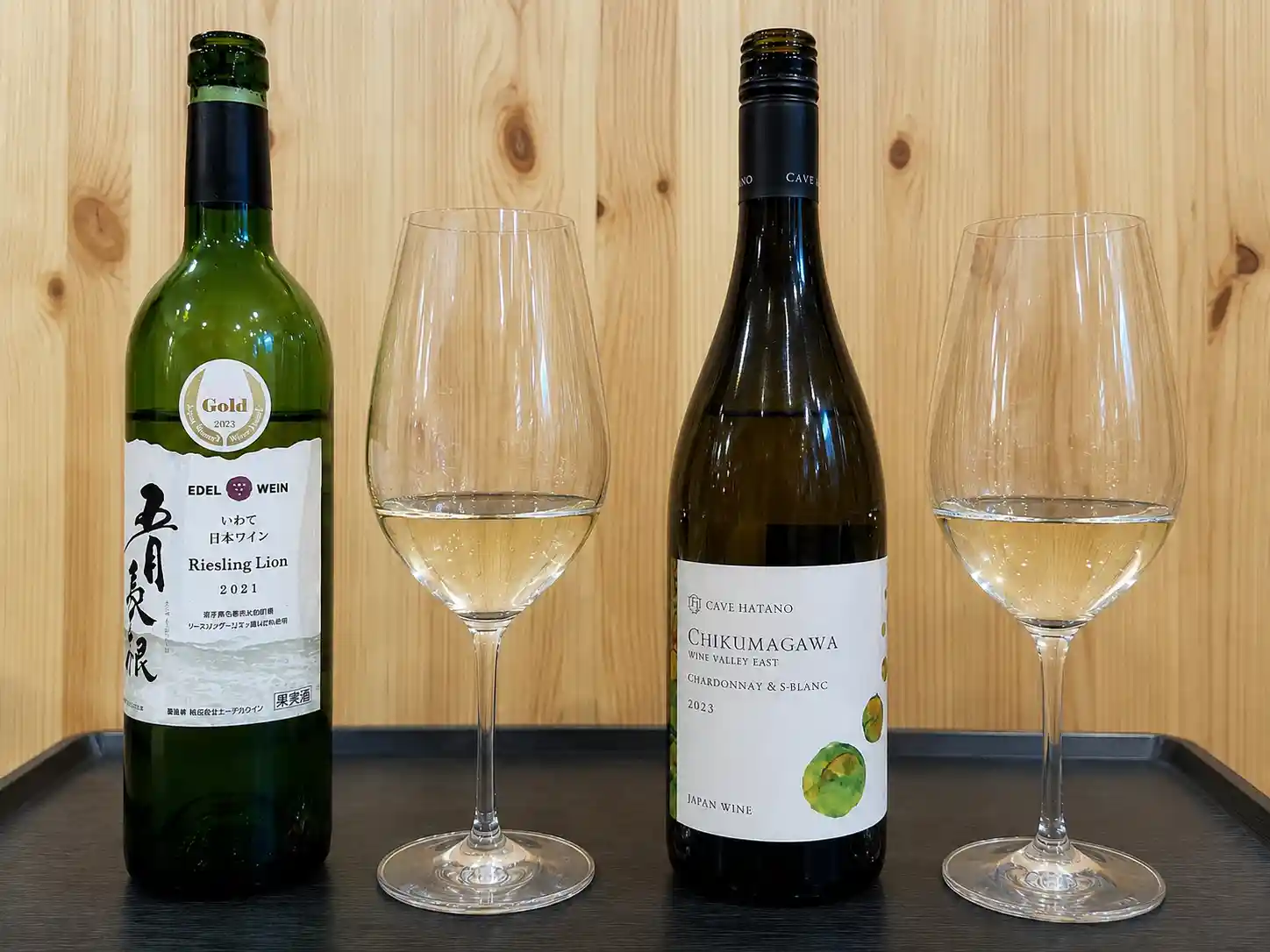
Two distinctive Japanese white wines I have enjoyed: Edel Wein Riesling Lion 2021 from Iwate and CAVE HATANO Chardonnay & Sauvignon Blanc 2023 from Nagano’s Chikumagawa Wine Valley.
Japanese white wine includes familiar grapes such as Chardonnay and Riesling alongside distinctive Japanese varieties and crosses that are rarely seen overseas.
Japanese white wine is often introduced through Koshu, and for good reason. Koshu is Japan’s signature white grape and an important part of the country’s wine story. But after years of visiting wineries and tasting wines around Japan, I have found that the white-wine picture is much broader than many visitors expect.
Alongside Koshu, I have tasted Japanese Chardonnay, Riesling, Pinot Gris, Sauvignon Blanc, Kerner and Pinot Blanc, as well as locally developed or distinctive grapes such as Shinano Riesling, Ryugan, Kai Blanc, Riesling Lion and Yama Blanc. I have also tried wines made from grapes better known in Japan as table grapes, including Delaware, Niagara and Shine Muscat.
What interests me most is the range. Some are crisp and dry, others carry a softer sweetness or more obvious fruit, and even wines made from the same grape can be very different. Japanese white wine is not one style, and that diversity is what makes it interesting to explore.
What Japanese White Wine Can Be Like
I would be careful about giving Japanese white wine one fixed tasting profile. Grapes are grown in very different conditions from Yamanashi and Nagano to Hokkaido, Yamagata, Akita and Iwate, and wineries work with both international varieties and grapes that are rarely seen outside Japan.
In my own tastings, freshness and good acidity come up often, but the wines can range from delicate and mineral to softly sweet, citrus-driven, floral or quite tropical. The grape, vineyard and producer matter more than any single idea of what a Japanese white wine should taste like.
Koshu Is the Starting Point, Not the Whole Story
Koshu is still the natural starting point. I taste it regularly in Yamanashi and tend to prefer cleaner stainless-steel examples because I like being able to taste the grape and vineyard clearly. I often find citrus, green apple, minerality and good acidity, although Koshu can be made in many different styles.
I cover its origins, winemaking and different expressions separately in the Koshu Wine Guide. Sparkling Koshu also has enough depth to stand on its own in the Koshu Sparkling Wine Guide.
Here, Koshu is useful as a reference point. Once you move beyond it, Japanese white wine becomes much more diverse.
Japanese Chardonnay: One of the Whites That Changed My Mind
I have never been especially drawn to heavy, buttery Chardonnay. That is one reason Japanese Chardonnay has been interesting for me. Many of the examples I encounter are brighter and lighter, with enough freshness to make the grape feel more inviting.
I have tasted Chardonnay from Manns, Estate Chardonnay from Haramo Winery, and Chardonnay from Sakaori, among others. They are not identical wines, and I would not force them into one flavor description. More generally, I often find Japanese Chardonnay less heavy than the richer styles I had associated with the grape in the past.
A particularly good example of how Chardonnay can work in Japan was CAVE HATANO Chardonnay & Sauvignon Blanc 2023 from the Chikumagawa Wine Valley in Nagano. I thought it was an excellent, high-quality blend. What I liked was how it brought together qualities I enjoy in both grapes: the recognizable character of Chardonnay with the drier, fresher side of Sauvignon Blanc. Neither grape seemed to overpower the other.
For me, wines like this show why Chardonnay deserves a substantial place in a Japanese white-wine guide. Koshu may be the signature Japanese grape, but Chardonnay and Chardonnay-based wines can express a very different side of modern Japanese winemaking.
Riesling, Shinano Riesling and Riesling Lion
Riesling and Riesling-related varieties have given me some of my favorite softer white wines in Japan.
Manns Shinano Riesling is one I particularly enjoy. It is not too sweet. The sweetness is softer and more delicate, which is exactly the kind of balance I like in Riesling.
I have also enjoyed Château Mercian Omori Riesling from Akita. My memory of that wine is citrus with a mild sweetness. It is a different expression from Shinano Riesling, but both show that some sweetness can work very well when the wine remains fresh and balanced.
Riesling Lion is a particularly Japanese part of this story. It is a cross between Riesling and Koshu Sanjaku and is strongly associated with northern Japan. I have tasted Riesling Lion from Asahimachi Wine, including Forte and Lion Riesling, and I have also tasted Edel Wein Satsukinagane Riesling Lion 2021.
The Edel Wein 2021 was an excellent example of the grape. I remember the sweetness as well balanced rather than heavy, with a soft, smooth character and a refreshing finish. That 2021 vintage also received a Gold award at the Sakura Awards 2023.
Riesling Lion is one of the varieties that makes Japanese white wine more interesting to me because it is not simply another international grape planted in Japan. It has developed its own place in regions such as Iwate, where producers have worked with it for many years.
Pinot Gris Can Show Very Different Sides in Japan
Pinot Gris has given me two clear examples of how different Japanese wines from the same grape can be.
A 2021 Pinot Gris from COCO FARM & WINERY had pear and white peach, with soft fruitiness, noticeable acidity and a very good balance between the fruit and freshness.
Yamazaki Winery Pinot Gris left a very different impression. I found it more tropical, with a fruit character that reminded me of mango.
For me, those two wines are a good reminder of how much variation there can be in Japanese white wine. Even with the same grape, different vineyards and winemaking choices can produce very different expressions. It is one reason I avoid giving Japanese white wine a single tasting profile—the range is much broader than that.
Sauvignon Blanc, Kerner and Other International Whites
Sauvignon Blanc is another international grape that can work very well in Japan. I have enjoyed Sauvignon Blanc from Villa d’Est in Nagano, while a Manns Nagano Sauvignon Blanc stands out in my memory as exceptional.
Kerner is another white I have enjoyed. The example I remember was light in a way that reminded me slightly of Koshu, but clearly different: lemon, green apple and pear, with a mineral character and decent acidity. I am leaving the producer unnamed because I am not completely certain which bottle it was, and I would rather be accurate than attach the memory to the wrong winery.
I have also tasted Pinot Blanc from Takahata Winery and Petit Manseng as part of a blend at Sanyo Winery. Japan also produces wines from varieties such as Riesling, Sauvignon Blanc, Semillon and Pinot Gris in several regions.
These grapes do not need to taste exactly like their European counterparts to be interesting. What matters to me is whether the wine feels balanced and whether the producer has made something that suits the grape and the place.
Japanese-Developed and Lesser-Known White Grapes
Some of the most interesting names in Japanese white wine are grapes that many overseas visitors have never heard of.
I have tasted Kai Blanc from Haramo Winery, along with varieties and crosses such as Chardonnay de Corail, Shinano Riesling and Riesling Lion. These wines add another layer to the category because they are not simply familiar international grapes grown in Japan.
Ryugan is particularly interesting because of its versatility. I have tasted Ryugan from Goichi Wine and remember enjoying it. The grape can be made as a still white wine, used for sparkling wine, and even distilled into brandy. Manns took it in a very different direction with its SOLARIS Brandy “Ryugan” 1989, made from Ryugan grapes harvested in 1989, double-distilled and matured in oak.
The brandy is not a white wine, but it is a useful example of how differently one grape can be expressed.
Another unusual wine I have tasted is Yama Blanc from Totto Wine, made using Yama Budo and Pinot Noir. Yama Blanc has an aroma reminiscent of green apples and a tropical fruit character, but it is not sweet. The finish is crisp, clean and refreshing.
Table Grapes Can Also Become Japanese Wine
Japan has a strong table-grape culture, and some grapes better known as fruit are also used for wine.
Delaware and Niagara have both been used for Japanese wine, and I have also tasted Shine Muscat wine from Sanyo Winery. Shine Muscat is much better known in Japan as a premium table grape, which makes seeing it used in wine particularly interesting.
I would not put these grapes in exactly the same category as Chardonnay, Riesling or Koshu. Their role is different. But they help show how broad the Japanese approach to grapes can be, especially when producers experiment with fruit that already has a strong place in Japanese agriculture.
What I Have Learned from Tasting Japanese White Wine
The biggest lesson for me is that Japanese white wine is much more varied than simple descriptions often suggest.
Koshu can be crisp and mineral. Shinano Riesling can carry a delicate sweetness. Riesling Lion can be soft, balanced and refreshing. Pinot Gris can move from pear and white peach to almost tropical mango. Kerner can show lemon, green apple, pear and minerality. Yama Blanc can be tropical and fruity while still finishing crisp and clean. Chardonnay can feel lighter and brighter than the heavier styles many people associate with the grape, while a well-made Chardonnay–Sauvignon Blanc blend can bring together qualities of both.
That is why Japanese white wine becomes more interesting once you move beyond a single grape or a single tasting profile. There is a lot of experimentation here, but there is also a growing sense of which varieties and styles work well in different parts of Japan.
Where This Fits in the Wider Japanese Wine Story
This guide is about Japanese white wine as a national category, with particular attention to Chardonnay and the wider range of white grapes being used in Japan.
For a deeper look at Yamanashi’s red and white grape varieties, see Wines of Yamanashi. For a broader introduction to Japanese wine across both white and red styles, see my Japanese Wine Guide.
If you are visiting Yamanashi, the wines available at wineries change with the producer, vintage and season. On our private Yamanashi wine tour, I like showing guests that there is much more to Japanese wine than the bottle or grape they may already know.
For me, that discovery is still one of the most enjoyable parts of tasting Japanese white wine.