


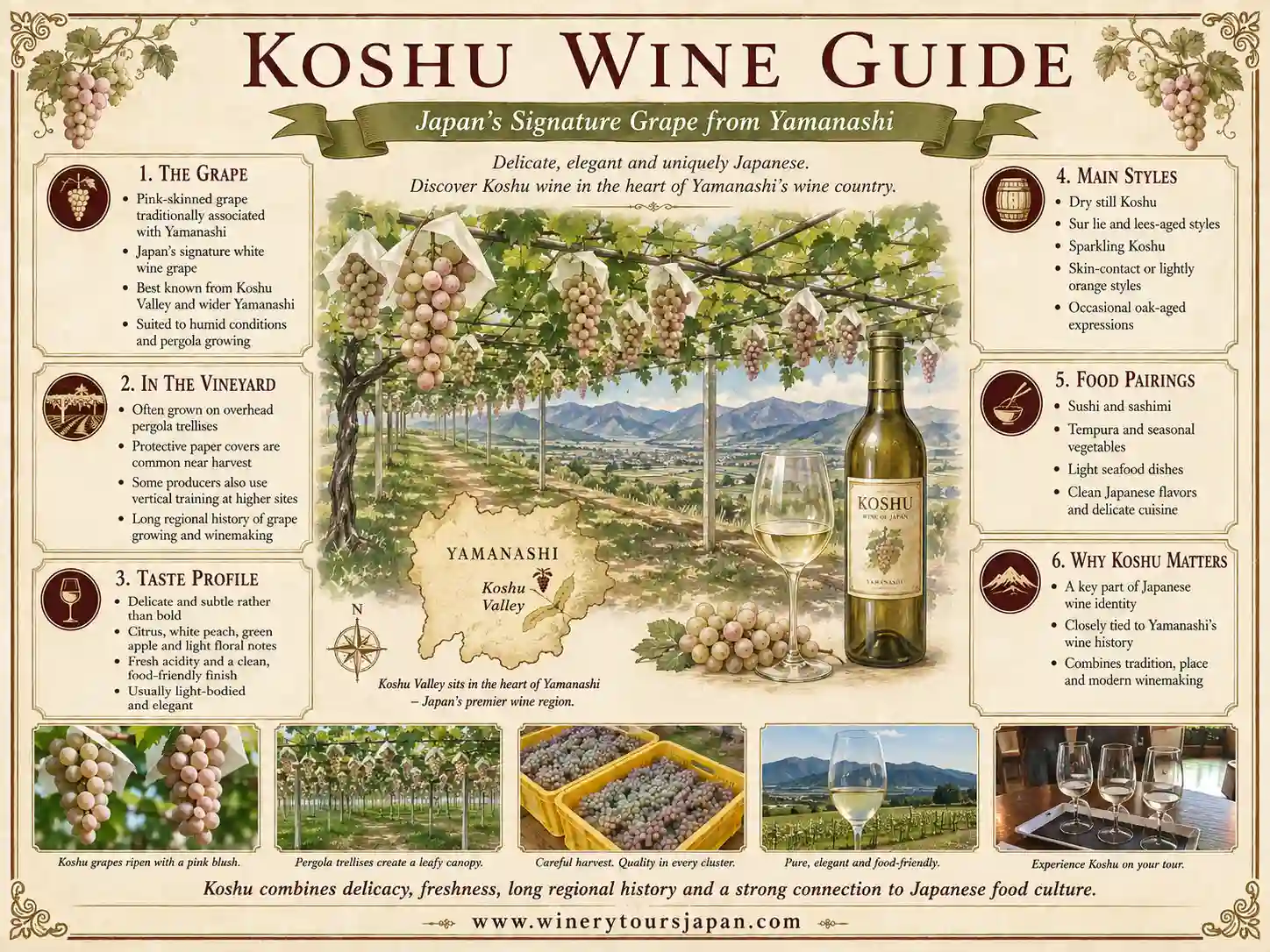
Koshu is Japan’s signature white-wine grape and the variety most closely associated with Yamanashi. Its pale pink skins, restrained aromas and ability to produce several distinct wine styles make it unlike the international white varieties that many visitors already know.
At first, Koshu can appear quiet in the glass. Its appeal usually comes from balance, texture, freshness and the way it works with food rather than from intense perfume or heavy fruit. Comparing several examples reveals a grape capable of crisp still wine, textured sur lie wine, sparkling wine, barrel-influenced wine and carefully made skin-contact styles.
This Koshu wine guide explains what the grape is, what is known about its origins, why it became established in Yamanashi, how modern winemaking changed its reputation and what to notice when tasting it.
For broader regional context, including Yamanashi’s wine areas, geography and winery concentration, read the Yamanashi wine region and Koshu Valley guide.
Koshu wine guide contents
- What is Koshu?
- Koshu’s origins and historical traditions
- Genetic background and international recognition
- Why Koshu became established in Yamanashi
- How Koshu is grown
- How modern Koshu wine developed
- What Koshu wine tastes like
- Main Koshu wine styles
- Food pairing
- How Koshu compares with other white wines
- How to compare Koshu in Yamanashi
- Frequently asked questions
What is Koshu?
Koshu is a pink-skinned grape used primarily to make white wine. The berries may appear pale rose, gray-pink or light purple when ripe, but the juice itself is lightly colored. Winemakers decide how much contact the juice has with the skins, which affects the finished wine’s color, texture, aroma and level of grip.
The grape is generally considered a late-ripening variety. It has relatively thick skins and naturally loose bunches, features that have helped it cope with humid growing conditions better than many tightly clustered varieties.
Koshu is most closely associated with Yamanashi, where it has been cultivated for centuries. It is not simply a Japanese version of Chardonnay or Sauvignon Blanc. Its quieter profile and naturally restrained structure give it a separate identity.
Koshu’s origins and historical traditions
The early history of Koshu is not completely settled. Several traditions attempt to explain how the grape arrived in Japan and became established in the area now known as Yamanashi.
One account connects the grape with the Buddhist monk Gyoki and Daizenji Temple in the eighth century. Another story says that Kageyu Amemiya found an unusual vine growing near Katsunuma in the late twelfth century and successfully cultivated it.
These stories are important parts of local wine culture, but they should be treated as historical traditions rather than proven accounts. What is clearer is that grapes were grown and consumed in the wider Koshu area long before modern commercial winemaking developed.
The name also reflects regional history. “Koshu” was an older name associated with the area that became Yamanashi Prefecture. The grape’s name therefore reinforces its long connection with the region.
Genetic background and international recognition
Research has placed Koshu mainly within Vitis vinifera, the species that includes most of the world’s best-known wine grapes. Genetic studies have also indicated influence from an East Asian wild grape in its ancestry.
Genetic research does not establish the precise route or date by which Koshu reached Japan. Its early movement and establishment therefore remain uncertain.
Koshu was registered as a recognized wine-grape variety by the International Organisation of Vine and Wine in 2010. That recognition helped Japanese producers present Koshu under its own name in international markets and strengthened its position as a distinct Japanese wine variety.
Koshu also forms part of the standards used for wine carrying the Yamanashi geographical indication. The broader relationship between regional origin, Japan Wine and GI certification is explained in the Japan Wine and geographical indications guide.
Why Koshu became established in Yamanashi
Yamanashi remains the principal center of Koshu cultivation and winemaking. Generations of growers and producers have learned how to manage the grape under conditions that include summer rain, humidity, strong sunlight and significant differences between vineyard sites.
Koshu’s physical characteristics help explain its survival. Its relatively thick skins provide some protection, while its loose bunches allow more air to circulate between the berries. This can reduce the pressure created by moisture compared with varieties that form very compact clusters.
The grape’s long growing season also gives vineyard decisions considerable importance. Harvest timing affects acidity, fruit maturity, bitterness and the aroma compounds that may later appear in the wine.
Elevation, exposure and vineyard management can produce noticeable differences. A warmer site may give softer acidity and riper fruit, while a cooler or higher site may preserve more freshness. These differences help explain why Koshu should not be treated as one uniform style.
Yamanashi is part of a wider national wine industry. The Japanese wine regions guide explains how its role differs from Nagano, Hokkaido, Yamagata and other producing areas.
How Koshu is grown
Traditional Koshu vineyards often use high overhead pergolas. The vines spread across a raised framework, creating a broad canopy above the grower.
This system can help air move around the fruit and provides shade from intense summer sun. Growers may also use individual paper covers or umbrellas to protect bunches from rain and physical damage.
Pergola cultivation remains closely connected with Yamanashi’s grape-growing landscape, but it can require considerable labor. Large vines and uneven ripening across a wide canopy make careful pruning, crop control and selective harvesting important.
Some wineries also use vertical vineyard systems more commonly seen in Europe and other wine regions. These plantings can offer tighter control over vine growth, sunlight exposure and yields, particularly in estate-managed vineyards.
One system is not automatically superior in every location. The best approach depends on the site, rainfall, vineyard ownership, labor, desired yield and the style of wine the producer intends to make.
How modern Koshu wine developed
Koshu was historically valued as a table grape as well as a wine grape. For a long period, wine was often made from fruit that was surplus to the fresh-grape market or considered unsuitable for sale as table grapes.
Earlier wines could be sweet, neutral or affected by oxidation. Low sugar, modest acidity, vineyard disease and inconsistent cellar practices made it difficult to produce clean, stable dry wine with a clear identity.
Cleaner fruit and cooler fermentation
Quality began to improve as growers and wineries paid closer attention to healthy planting material, vineyard selection and sanitation. Cleaner must preparation and lower-temperature fermentation helped preserve more delicate fruit and citrus aromas.
These changes supported a shift away from heavily sweetened wine toward fresher dry styles. They also made faults and oxidation less likely to obscure Koshu’s naturally restrained character.
The importance of sur lie
Sur lie production became one of the most influential developments in modern Koshu. After fermentation, the wine remains in contact with the spent yeast for a controlled period.
This contact can give the wine more body, texture and savory complexity without requiring heavy oak. It helped producers build a fuller style while retaining the freshness and subtlety associated with the grape.
Regional cooperation also mattered. Techniques developed or refined by larger wineries were shared with other producers, allowing improvements to spread through Yamanashi rather than remaining with a single company.
Managing citrus and grapefruit aromas
Later research examined how vineyard practices, harvest timing, oxygen exposure and fermentation choices affect citrus-like aromas in Koshu. Particular attention was given to compounds capable of producing grapefruit impressions.
The goal was not simply to make Koshu more aromatic. It was to reveal more of the grape’s potential while avoiding harsh bitterness, medicinal notes or excessive oxidation.
Lower yields and site expression
Some producers began placing greater emphasis on vineyard origin, lower yields and smaller, more concentrated fruit. Single-vineyard and limited-production Koshu showed that the grape could reflect differences in site and cultivation rather than functioning only as a light regional white wine.
This work expanded the range of serious Koshu without replacing the fresher, accessible styles that remain important to the region.
What does Koshu wine taste like?
Koshu is usually more restrained than strongly aromatic white varieties. It often rewards attention to texture, acidity and finish rather than delivering one dominant aroma immediately.
Depending on the vineyard, vintage and winemaking approach, common impressions may include:
- lemon, grapefruit or yuzu-like citrus
- white peach, pear or green apple
- white flowers
- fresh herbs or subtle savory notes
- a saline, stony or mineral-like impression
- light bitterness or gentle grip on the finish
- a clean and refreshing overall structure
“Delicate” is often used to describe Koshu, but it should not be confused with flavorless. A well-made example may reveal more detail as it warms slightly in the glass or when it is tasted with food.
Acidity varies. Historically, low acidity and low sugar created difficulties in some vineyards. Modern canopy management, site selection and harvest decisions allow producers to preserve greater freshness while still achieving sufficient ripeness.
Koshu is commonly made as a dry wine. Some examples may appear rounder because of ripe fruit, lees contact or barrel aging, but softness does not necessarily mean residual sweetness.
Main Koshu wine styles
There is no single definitive Koshu. The most useful introduction is to compare several production styles.
Fresh, unoaked Koshu
This style usually emphasizes citrus, light orchard fruit and a clean finish. Stainless-steel fermentation and careful protection from oxygen can preserve freshness and provide a clear introduction to the grape.
Sur lie Koshu
Lees contact adds breadth and texture. The wine may show subtle bread, yeast or savory notes while retaining Koshu’s restrained fruit and food-friendly character.
Citrus-led Koshu
Some producers use vineyard and fermentation techniques designed to emphasize grapefruit or other citrus aromas. These wines can appear more expressive without becoming as pungent as highly aromatic Sauvignon Blanc.
Barrel-fermented or barrel-aged Koshu
Careful oak use can add spice, creaminess and weight. The most balanced examples retain enough freshness and grape character to prevent the barrel from dominating the wine.
Sparkling Koshu
Koshu’s light body and fresh profile make it suitable for sparkling wine. Styles range from simple and refreshing to more structured examples developed through longer aging and more complex production methods.
Skin-contact Koshu
Allowing the juice to remain with the pink skins can create additional color, aroma, texture and tannin. Some wines appear pale copper or amber, while others retain only a faint pink or gray tone.
Skin-contact Koshu is often more gently structured than intensely tannic orange wines made from other grapes. The result depends heavily on the length of skin contact and the producer’s intended style.
Single-vineyard and limited-production Koshu
These wines focus attention on an individual site, older vines, reduced yields or a particular vineyard method. They can show greater concentration and texture, although quality depends on the vineyard and producer rather than the label alone.
For a wider comparison with other white varieties grown in Japan, see the Japanese white wine guide.
Why Koshu works well with food
Koshu’s restrained aromas and moderate weight allow it to accompany delicate ingredients without covering them. Its freshness can lift a dish, while its subtle savory qualities can work with umami, dashi and lightly seasoned foods.
Common pairings include:
- sushi and sashimi
- grilled or lightly seasoned fish
- shellfish
- tempura
- tofu and vegetable dishes
- dishes using dashi
- fresh herbs and salads
- lightly seasoned chicken
- mushrooms with textured sur lie or barrel-aged styles
The wine style matters as much as the grape. A crisp stainless-steel Koshu may suit raw seafood, while a fuller sur lie or barrel-influenced wine can work with richer fish, poultry and dishes with more texture.
More examples are covered in the Japanese wine and food-pairing guide.
How Koshu compares with other white wines
Comparisons can help first-time drinkers, but Koshu is best understood on its own terms.
- Compared with Chardonnay: Koshu is normally lighter and less overtly creamy. Barrel-aged versions may show some overlap in texture.
- Compared with Sauvignon Blanc: Koshu is generally quieter and less herbaceous. Citrus-led examples may show grapefruit, but usually without the same aromatic intensity.
- Compared with Pinot Grigio: both can be light and refreshing, but Koshu may show more savory detail, gentle bitterness or texture from lees and skin contact.
- Compared with Riesling: Koshu is usually less aromatic and less likely to show obvious sweetness, although both can retain freshness and work well with food.
- Compared with Muscadet: restrained fruit, seafood compatibility and lees-derived texture can create a useful comparison, though the grapes and regional traditions are different.
Koshu is not designed to imitate one international variety. Its identity comes from the relationship between the grape, Yamanashi’s vineyards and the production choices developed by Japanese growers and winemakers.
How to compare Koshu in Yamanashi
From Winery Tours Japan’s experience guiding winery visits, the most effective way to understand Koshu is through comparison. One glass may initially seem understated, while several examples reveal how strongly vineyard and cellar decisions influence the result.
When tasting, consider:
- whether the acidity feels sharp, soft or rounded
- how much weight and texture the wine has
- whether citrus, orchard fruit, floral or savory notes dominate
- whether lees contact adds breadth
- whether oak supports or covers the grape
- whether skin contact adds color, grip or bitterness
- how the wine changes when tasted with food
- whether the finish remains clean and balanced
Availability differs among wineries. Opening days, reservations, tasting systems and current releases can change, and a particular wine or meeting cannot be assumed to be available on every visit.
The Koshu Valley wine day-trip planning guide explains the practical side of visiting the region.
Guests who prefer a privately arranged day can also review the one-day private Yamanashi wine tour.
Final thoughts
Koshu’s importance comes from more than its age or its status as a Japanese grape. It represents the long process of adapting viticulture and winemaking to local conditions.
The grape moved from a table-grape tradition and inconsistent early wine into a broad range of modern styles. Cleaner fermentation, sur lie aging, vineyard selection, aroma research, sparkling production, careful oak use and skin contact have all expanded what Koshu can express.
Its character remains restrained, but that restraint is part of its identity. The best examples show that delicacy, texture and compatibility with food can be as distinctive as power or intense aroma.
Frequently asked questions
What is Koshu wine?
Koshu wine is usually a white wine made from the pink-skinned Koshu grape. The variety is most closely associated with Yamanashi and is known for restrained fruit, freshness, subtle texture and compatibility with food.
What does Koshu wine taste like?
Koshu may show lemon, grapefruit, yuzu-like citrus, white peach, pear, flowers, herbs and a clean mineral-like or saline impression. Its profile is generally subtle rather than intensely aromatic.
Is Koshu wine dry or sweet?
Most modern Koshu wines are dry. Some examples may feel softer or rounder because of ripe fruit, lees aging or oak, but that does not necessarily mean they contain noticeable sweetness.
Why are Koshu grapes pink if the wine is white?
The skins are pale pink or gray-pink, but the juice is lightly colored. White wine can be produced by pressing the grapes and limiting skin contact. Longer skin contact may create copper, amber or pale pink tones.
Where did Koshu originate?
The exact route by which Koshu reached Japan remains uncertain. Historical traditions connect it with Katsunuma and Daizenji Temple, while genetic research places it mainly within Vitis vinifera with some East Asian wild-grape influence.
Why is Koshu associated with Yamanashi?
Yamanashi has been the principal center of Koshu cultivation for centuries. Its growers and wineries developed vineyard and cellar methods suited to the grape and the region’s humid summer conditions.
Can Koshu be sparkling or skin-contact wine?
Yes. Koshu is made as fresh still wine, sur lie wine, sparkling wine, barrel-fermented or barrel-aged wine and skin-contact wine. The exact range differs by winery and vintage.
What food pairs well with Koshu?
Koshu commonly works with sushi, sashimi, shellfish, grilled fish, tempura, tofu, vegetables, dashi-based dishes and lightly seasoned chicken. Fuller sur lie or barrel-aged examples can accompany richer dishes.