


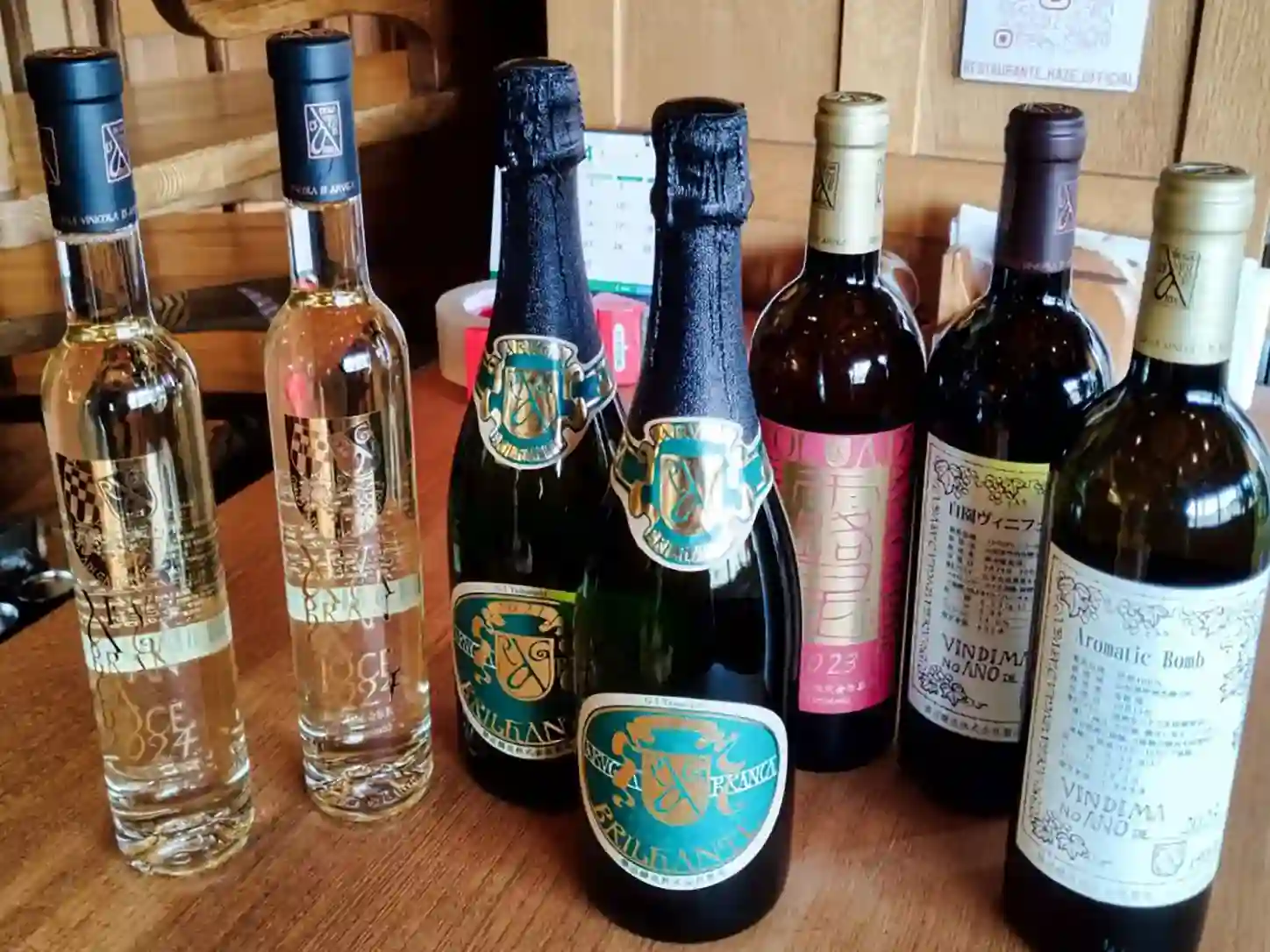
A selection of Yamanashi wines showing the range of white, sparkling and red styles produced in the region, photographed by Winery Tours Japan.
When people first hear “Yamanashi wine,” they usually think of Koshu. That makes sense because Koshu is the grape most closely associated with the region, but after years of tasting in Yamanashi I would never describe the local wine scene through one grape alone.
Yamanashi wineries work with Muscat Bailey A, Chardonnay, Merlot, Black Queen, Kai Noir, Yama Sauvignon, Delaware and many other varieties. Some are Japanese-bred grapes, some are international varieties, and some began life mainly as table grapes. What interests me most is how differently individual producers handle them.
This is my first-hand guide to the wines of Yamanashi: the grapes I regularly taste, the styles I find most interesting, and the comparisons that help guests understand why this small wine region can produce such a broad range of wines. For the geography and history behind the region, see the Yamanashi wine region guide.
Koshu: The Wine I Return to Most Often
Koshu is still the natural place to begin. I have tasted it in many forms over the years: clean stainless-steel wines, sur-lie styles, barrel-aged Koshu, sparkling wine, skin-contact examples and occasionally older vintages with significant bottle age.
My personal preference often leans toward stainless steel because I like being able to taste the grape and vineyard clearly. A good example can show citrus, green apple, mineral character, freshness and a gentle bitterness on the finish. Those qualities can be subtle, which is why I find Koshu more interesting when it is compared rather than judged from one glass.
Barrel-aged Koshu can be very different. Oak may add weight, texture, spice and a rounder impression. Some producers integrate the barrel lightly, while others make a much more obvious stylistic statement. I do not see one method as automatically superior. The contrast tells you something about the winery.
Sur-lie aging is another important part of the picture. Keeping the wine in contact with the lees can add texture and complexity without turning Koshu into a heavy wine. Haramo Wine, for example, has produced Koshu in styles that I have enjoyed for exactly this reason.
Then there is sparkling Koshu. Some of my favorite examples are dry, fresh and mineral, with citrus or grapefruit character and enough acidity to work well with seafood and lighter Japanese food. Aruga Branca Brilhante and other good sparkling Koshu wines show how well the grape can work with bubbles.
For the grape’s history, vineyard characteristics and styles in more depth, see my Koshu wine guide.
Muscat Bailey A: More Range Than Many People Expect
Muscat Bailey A is the Japanese red grape I most often use to show guests that local red wine is not one fixed style.
A lighter example can be bright, aromatic and fruit-driven, with strawberry, cherry and floral notes. I like stainless-steel versions because they can keep that character clear and direct. Other producers use oak to add spice, structure and a firmer texture.
One of the Muscat Bailey A wines that has stood out to me is an oak-aged 2018 from MGVs. It had more depth and structure than many first-time visitors expect from the grape, while still retaining the fruit that makes Muscat Bailey A recognizable.
The difference between stainless steel and barrel-aged Muscat Bailey A can be as instructive as the same comparison with Koshu. It shows how much of a finished wine comes from the producer’s decisions rather than the grape name alone.
Muscat Bailey A also works in blends, and it sometimes appears in sparkling wine. I have tasted enough variations over the years that I would be cautious about describing the grape simply as “light and fruity.” It can be that, but it can also be much more serious.
For more detail on the grape itself, see the Muscat Bailey A guide.
Yamanashi White Wines Beyond Koshu
Chardonnay
Chardonnay is probably the international white variety I encounter most often in Yamanashi. In general, the examples I enjoy here tend to feel brighter and less heavy than the buttery style some guests expect from Chardonnay.
I have tasted good Yamanashi Chardonnay from several producers, both in stainless-steel and barrel-influenced styles. One wine that made a strong impression on me was a 2023 Chardonnay and Sauvignon Blanc blend from CAVE HATANO. The Chardonnay character was clear, but the Sauvignon Blanc brought a drier, fresher side that kept the wine lively.
Yamanashi Chardonnay can also be used for sparkling wine, and the grape gives producers a useful international reference point beside Koshu.
Delaware
Delaware is familiar to many people in Japan as a table grape, but wineries also use it for wine. The wines can be very aromatic and fruit-forward, and the style can range from dry to off-dry, sweet or sparkling depending on the producer.
For me, Delaware is interesting because it reminds guests not to divide grapes too rigidly into “table grapes” and “wine grapes” when talking about Japan. The local history of grape growing is more complicated than that.
Kai Blanc and Smaller-Production Whites
Kai Blanc is one of the less common Japanese white varieties I have tasted in Yamanashi. Haramo has produced examples, and wines like this are useful because they show that Japanese grape development did not stop with Koshu.
Depending on the winery and vintage, I also encounter smaller amounts of Sauvignon Blanc, Riesling-related varieties, Pinot Gris and other whites. They are not the foundation of Yamanashi wine, but they make the region more interesting because they give producers more ways to express different sites and winemaking ideas.
Yamanashi Reds Beyond Muscat Bailey A
Yama Sauvignon
Yama Sauvignon is one of my favorite Japanese red varieties. I find it lighter and brighter than Cabernet Sauvignon, with a fruitier character while still having enough structure to feel like a serious red wine.
Some of the best examples I have tasted have come from the Makioka area, particularly Sanyo Winery. I have also tasted good versions from around Fuefuki, although they can show a different character. Newer vineyard areas, including Hayakawa Valley, add another dimension to the variety’s future in Yamanashi.
Yama Sauvignon is exactly the kind of wine I like introducing to guests who already know the major international grapes. It is recognizably red wine, but it does not taste like a copy of Cabernet or Merlot.
Black Queen
Black Queen is another Japanese-bred red grape with a very different personality. It can produce deep color and noticeable acidity, with dark-fruit, plum, herbal or spicy notes depending on the producer.
I have encountered Black Queen on its own, in blends and even in sparkling wine. Haramo has made some interesting red combinations using Black Queen with other varieties, and those wines are a good example of the experimentation that still exists in Yamanashi.
Kai Noir
Kai Noir is a Japanese red variety developed in Yamanashi. It can produce darker, firmer wines than many people expect from Japanese reds, with black-fruit, herbal and spice characteristics.
It is not nearly as common as Muscat Bailey A, which makes it more interesting when it appears. I tend to think of wines like Kai Noir as part of the region’s deeper story rather than something every visitor will encounter.
Merlot, Cabernet Franc, Cabernet Sauvignon and Petit Verdot
International red varieties also have an important place in Yamanashi. Merlot is probably the most familiar, but Cabernet Sauvignon, Cabernet Franc and Petit Verdot are also used, often in blends.
These wines matter because they show how Japanese producers work with grapes that guests already know. The climate, vineyard sites and producer choices can make them feel quite different from the same varieties grown elsewhere.
I particularly enjoy comparisons where an international red sits beside a Japanese variety. A Merlot or Cabernet-based wine can give the guest a reference point, while Muscat Bailey A, Yama Sauvignon or Black Queen shows what is more distinctive about Japan.
Table Grapes and Unusual Yamanashi Wines
Yamanashi is one of Japan’s great fruit-growing areas, so it is normal to see some overlap between the grapes people know from the fruit stand and the grapes that end up in a winery.
Delaware is the most obvious example, but Niagara, Kyoho and other table grapes can also appear in wine. These are not the varieties I would use to define Yamanashi as a wine region, but they are part of its culture and can produce enjoyable, aromatic wines.
I also enjoy finding bottles that do not fit neatly into a category: unusual blends, small experimental releases, older vintages or wines made from Japanese-developed grapes that most international visitors have never heard of.
Those discoveries are one reason I still enjoy tasting here after so many years. The region has its established identity, but it also leaves room for producers to try something different.
Why the Same Grape Can Taste So Different
One of the most useful things I can show guests in Yamanashi is that a grape name does not tell the whole story.
Two Koshu wines can taste completely different because of vineyard location, harvest timing, skin contact, lees aging or barrel use. The same is true of Muscat Bailey A. One winery may emphasize fresh fruit and lightness, while another deliberately builds more structure through lower yields, extraction or oak.
Vintage matters as well. Yamanashi has humid summers, heavy rain in some years and significant differences between vineyard sites. A producer has to respond to what the season gives them.
That is why I prefer tasting wines in context. The interesting question is not simply “Do I like Koshu?” or “Do I like Muscat Bailey A?” It is what this particular winery has done with the grape and whether that approach suits your palate.
The Yamanashi wineries to visit guide looks at individual producers and the wines that stand out to me without repeating the grape-by-grape information here.
How I Explain Yamanashi Wine to Guests
If I had to summarize Yamanashi wine in one sentence, I would say that the region is more varied than its reputation suggests.
Koshu is essential, and Muscat Bailey A is the natural red counterpart, but neither grape exists in only one style. Chardonnay and Merlot give useful international comparisons. Yama Sauvignon, Black Queen, Kai Noir and other Japanese varieties show a more local side of the region. Sparkling wines, unusual blends and small-production bottles add another layer.
On Winery Tours Japan private tours, all standard scheduled winery tastings are included in the tour price. That allows us to concentrate on the wines and the differences between producers rather than treating each stop as a separate tasting purchase.
The private one-day Yamanashi wine tour is arranged around the group’s interests and current winery availability, with local transportation during the tour, a seasonal local lunch and Morey as your Bilingual English-Speaking Local Guide.
For me, the best way to understand the wines of Yamanashi is not through a single famous bottle. It is through contrast: old and new producers, Japanese and international grapes, stainless steel and oak, familiar styles and wines that could only have come from this part of Japan.