


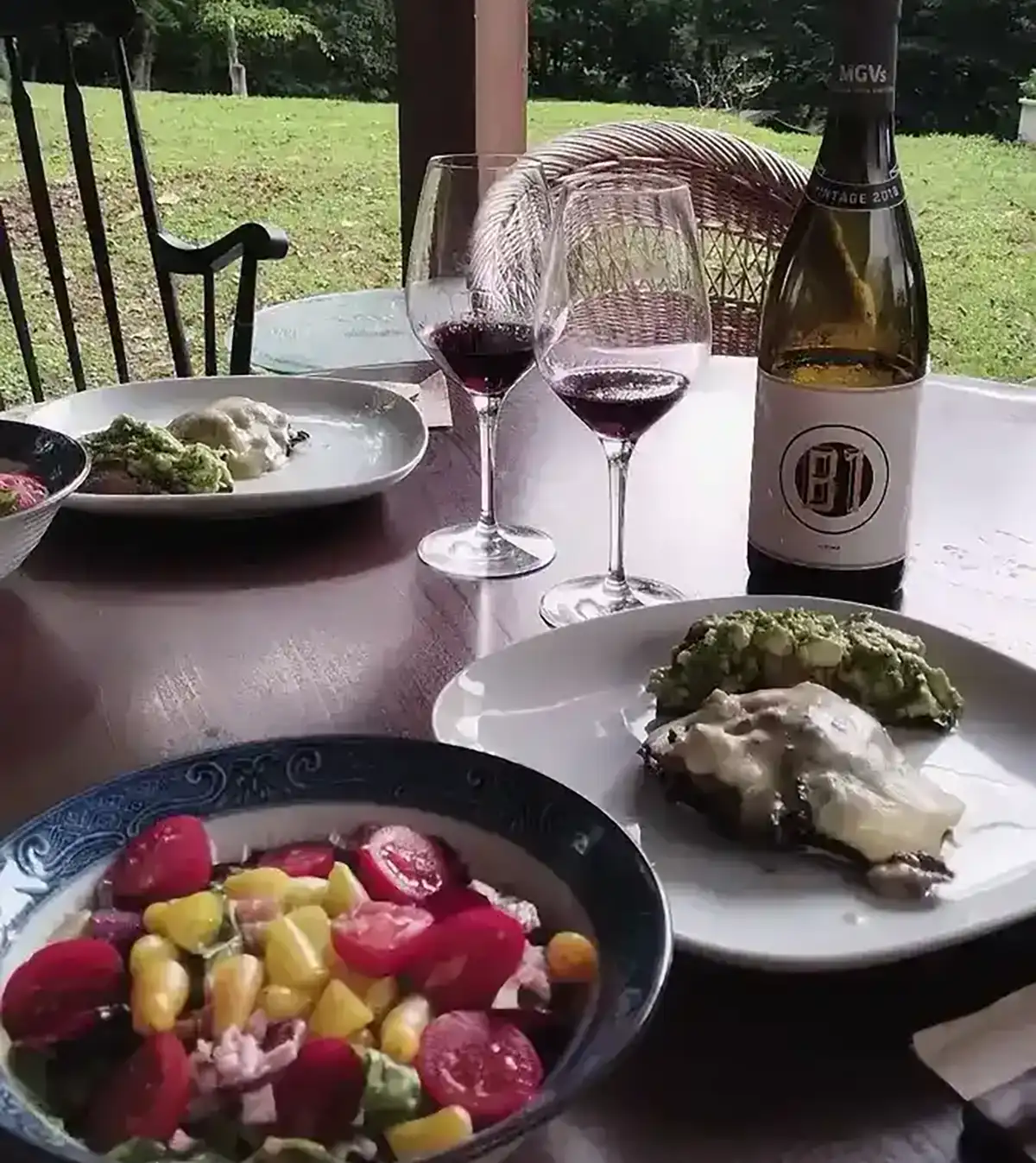
An oaked MGVs Muscat Bailey A with a fresh garden salad, sausage-stuffed portobello mushroom topped with Gouda, grilled shiitake mushrooms and spicy guacamole.
After years of tasting Japanese wine in Yamanashi and guiding guests through the wineries here, I have found that food pairing is usually less complicated than people expect.
There is no single wine for all Japanese food. When I choose wine with Japanese food, I start with the dish rather than the grape name. Tempura, sushi, yakitori, sukiyaki and ramen are very different dishes. The seasoning matters, the amount of fat matters, and whether something is raw, grilled, fried, salty, sweet or smoky can change what I want in the glass.
My starting point is simple: Koshu with lighter foods, and Muscat Bailey A or another Japanese red with richer foods. Then I adjust for the seasoning.
Why I Like Koshu with Food
I often use Koshu with food. I usually prefer stainless-steel Koshu at the table because I like tasting the grape clearly, with its acidity and the citrus, mineral or green-apple character I often find in Yamanashi.
Oak-aged Koshu can be interesting, but the grape is subtle and too much oak can cover the qualities I enjoy with delicate food. If you want more background on the grape and its styles, see my Koshu wine guide.
Koshu with Tempura and Tenzaru Soba
Dry Koshu with tempura is a combination I return to often. The acidity cuts through the oil in the batter and freshens the palate, while the wine is light enough not to cover shrimp, fish or vegetables.
I particularly like it with tenzaru soba: cold soba noodles served with tempura and dipping sauce. Kabocha pumpkin tempura is a little different because the pumpkin itself is sweet, so a Koshu with a slight hint of sweetness can also work well.
Koshu with Sushi, Sashimi and Grilled Fish
I also enjoy Koshu with sushi and sashimi, especially maguro, as well as seafood salad, grilled hokke and miso-marinated grilled salmon.
These dishes range from raw and delicate to oily or strongly seasoned. What connects them for me is the way Koshu’s acidity refreshes the palate without taking over the fish. The citrus or green-apple character I often find in Koshu can also lift the overall flavor of the meal.
Yakitori Wine Pairing: Koshu or Muscat Bailey A?
Yakitori shows why seasoning matters as much as the protein. With chicken or mushroom yakitori, especially shio or salt-seasoned skewers, I prefer Koshu. The salt, grilled flavor and umami can bring out a slightly sweet-and-sour impression in the wine.
For beef or pork yakitori, I usually move to Muscat Bailey A. I also prefer it with tare, the sweet-savory soy-based sauce. My practical rule is: Koshu with chicken, mushrooms and shio; Muscat Bailey A with richer beef or pork and tare.
Muscat Bailey A with Meat and Richer Food
Muscat Bailey A is one of the Japanese reds I reach for when the food becomes richer. Some visitors expect Japanese red wine to be sweet, but many of the Muscat Bailey A wines we taste in Yamanashi are fruity while still drinking dry.
I generally prefer stainless Muscat Bailey A because I like tasting the grape without too much oak, although a balanced oak-aged example can be very enjoyable with steak. I drink it with karaage, grilled beef, wagyu, bonito, grilled aji and ayu.
You can read more about the grape itself in my Muscat Bailey A wine guide.
Sukiyaki Wine Pairing
Sukiyaki makes me move toward red wine. Muscat Bailey A works well for me, but I also enjoy Yama Sauvignon, Merlot and Cabernet Sauvignon. The beef and sweet-savory seasoning can handle more body and fruit.
The same applies to wagyu. Depending on the bottle and preparation, I am comfortable choosing Muscat Bailey A, Merlot or Cabernet Sauvignon.
What Wine Goes with Ramen? I Like Kai Noir
I particularly like Kai Noir with miso- or shoyu-based ramen with pork, including chashu and sometimes tonkatsu. Kai Noir is a Japanese red grape bred from Black Queen and Cabernet Sauvignon.
With a salty, thick ramen broth, I find the wine cuts through the richness and clears my palate. After a sip, I am ready for the next mouthful of noodles and soup. That refreshing effect is why I enjoy the combination.
Where Japanese Chardonnay Fits for Me
I do not automatically reach for Chardonnay, but many Japanese Chardonnays I encounter feel brighter and lighter to me than heavy, buttery styles. I occasionally enjoy one before a meal with simple appetizers such as cheese, crackers and olives.
I keep Chardonnay brief here because this page is about food pairing, not another guide to Japanese white-wine varieties.
Japanese Wine with Pasta and Western Food
Japanese wine does not have to stay beside Japanese cuisine. I like dry Koshu with carbonara because the acidity helps with the richness of the sauce. I also enjoy Koshu with Greek salad and cheese quesadillas.
Muscat Bailey A works well for me with Bolognese, pizza, cheeseburgers and Mexican-style food. I enjoy it with beef tortillas, quesadillas, nachos with cheese, and barbecue chicken with a spicy Texas-style sauce.
One meal I particularly enjoyed was an oaked MGVs Muscat Bailey A with a fresh garden salad and sausage-stuffed portobello mushroom topped with Gouda, grilled shiitake mushrooms and spicy guacamole. It was rich and savory, but the wine still felt comfortable alongside it.
Sparkling Koshu with Food
I also like sparkling Koshu as an aperitif with cheese, salad, olives or salami. The acidity and bubbles make it refreshing before a meal, and it can reset the palate after richer, spicy or smoky food.
What Happens at Lunch on Our Yamanashi Wine Tours
Our lunches in Yamanashi are usually farm-to-table, often with handmade pasta, seasonal vegetables and salad. By lunchtime, guests have already been tasting wine during the morning, and many take a break from wine because they want to clear their palate before the afternoon winery visits.
Others continue with wine. Koshu is a common choice with pasta, while a richer pasta can push someone toward a red.
What I notice is how quickly the conversation changes once guests begin tasting Japanese wine. Many arrive having tasted little or none before. They start talking naturally about what they would eat with a particular wine. That is more useful to me than forcing every bottle into a fixed pairing chart.
When Koshu Is Not the Right Choice
I would not force Koshu with everything. A delicate dry Koshu can disappear beside food that is extremely rich, sweet, spicy or smoky.
In those situations, I would rather change the wine. Sometimes a slightly sweeter Koshu is more comfortable, and sparkling Koshu can work because the acidity and bubbles refresh the mouth after stronger flavors.
A Practical Starting Point
If you are new to Japanese wine and food pairings, start with the food rather than the grape name.
Koshu with lighter foods. Muscat Bailey A or another Japanese red with richer foods. Then adjust for the seasoning.
Chicken yakitori with shio leads me toward Koshu. Beef or pork yakitori with tare leads me toward Muscat Bailey A. Tempura makes me want dry Koshu. Sukiyaki makes me think red. Rich miso or shoyu ramen with pork can make me reach for Kai Noir.
Discover Japanese Wine in Yamanashi
Food is a direct way to understand Japanese wine. A Koshu beside tempura or seafood tells you something different from tasting it by itself, and a Japanese red beside grilled beef, sukiyaki or ramen does the same.
If you are new to these wines, my Japanese Wine Guide explains what visitors encounter and how I approach tasting them.
On our private Yamanashi wine tour from Tokyo, guests can taste Japanese wines in the region where they are made, enjoy a seasonal local lunch and decide for themselves which combinations they enjoy.
There are useful guidelines, but the answer still comes from tasting the wine with the food in front of you.